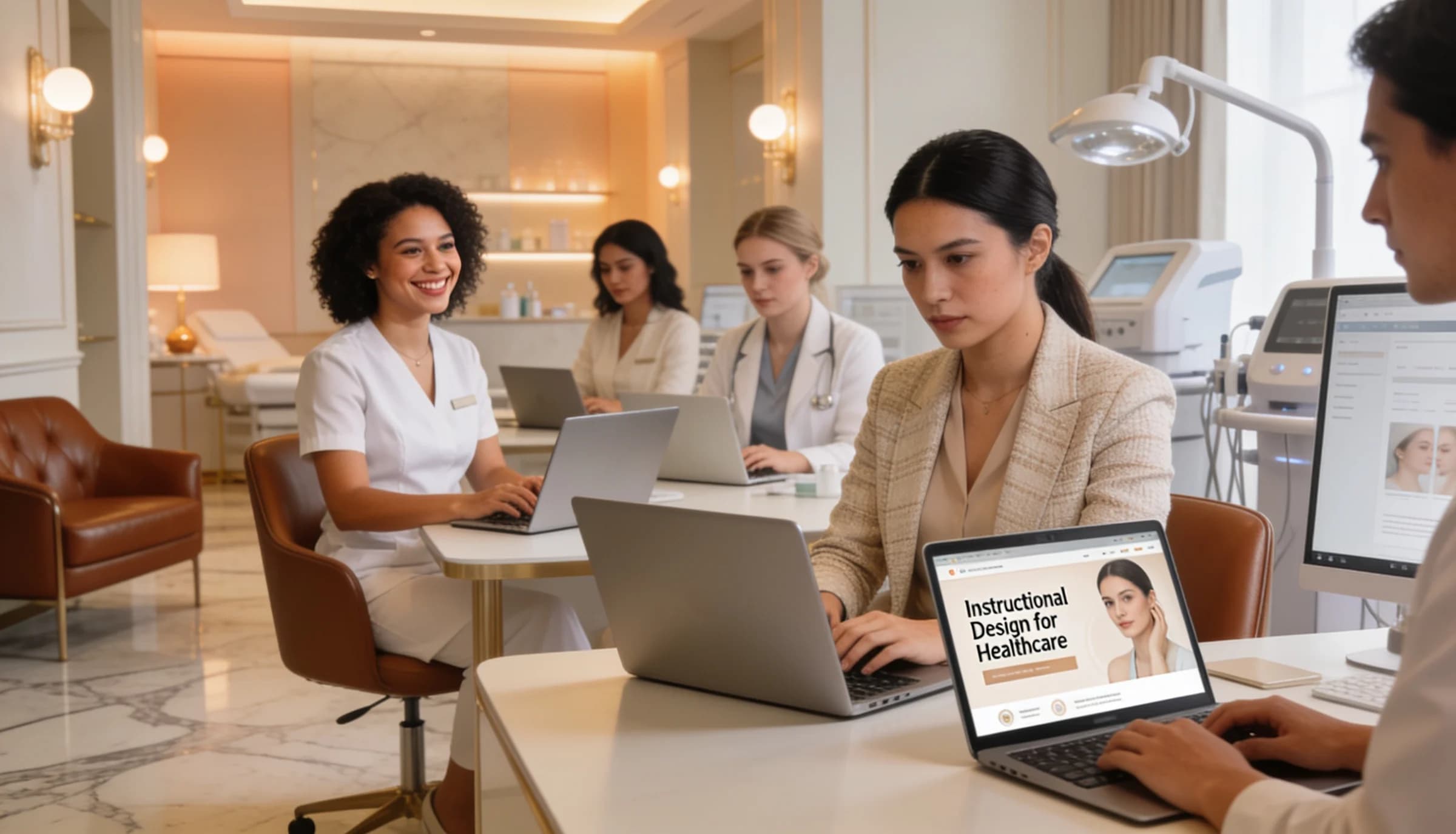
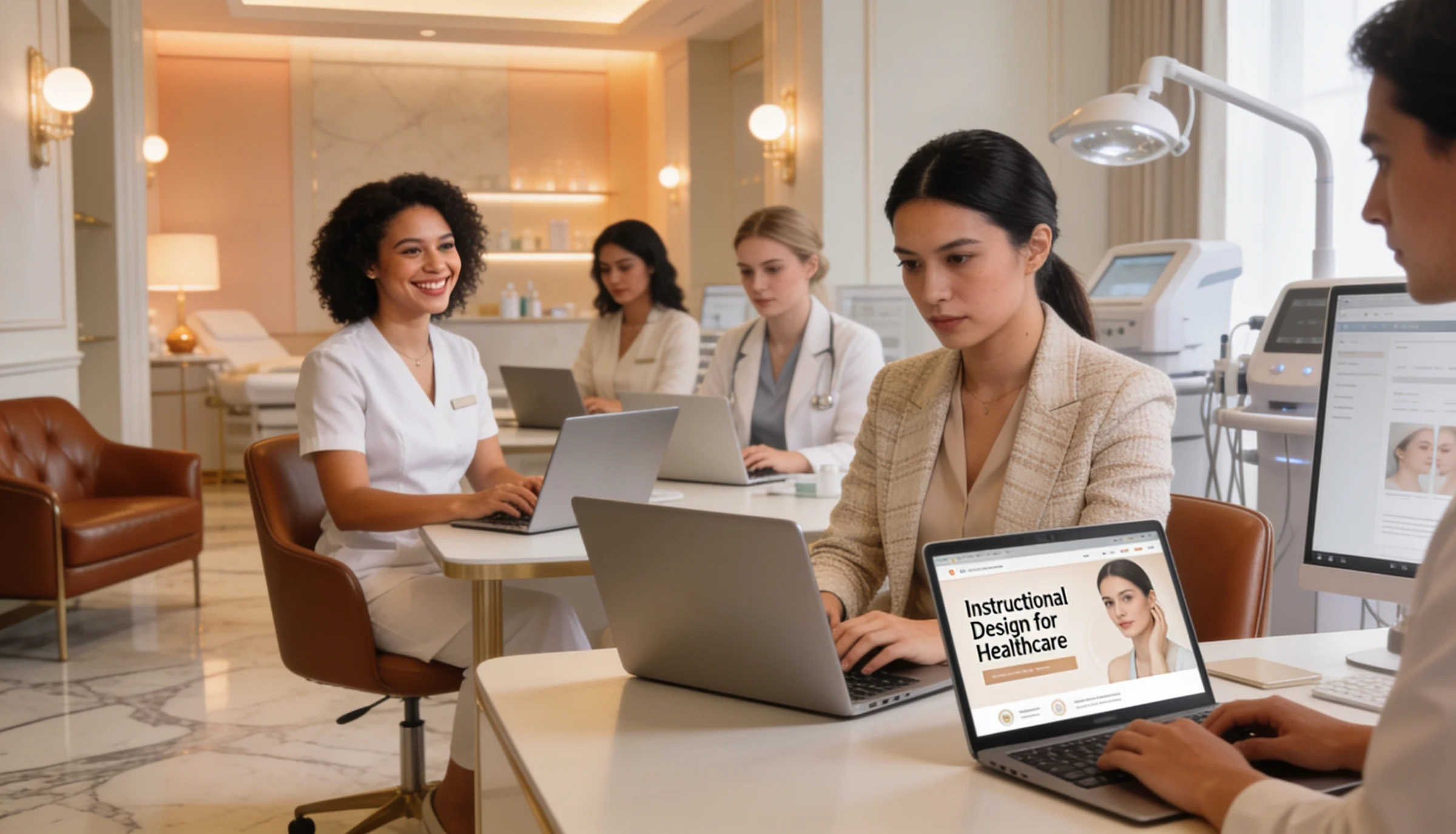
Healthcare education is evolving rapidly as organizations seek more effective ways to prepare clinical teams for increasingly complex patient care. Instructional design aesthetics is becoming an essential component of modern medical education by combining evidence-based learning strategies with engaging training experiences that improve knowledge retention and clinical performance. Rather than relying solely on traditional lectures or static training manuals, healthcare organizations are adopting structured instructional design frameworks that make learning more practical, interactive, and relevant to real-world clinical situations.
Continuous education is no longer optional in today’s healthcare environment. Advances in medical technology, changing regulations, new treatment protocols, and evolving patient expectations require healthcare professionals to update their skills throughout their careers. Well-designed training programs not only improve employee confidence but also contribute to safer patient care, stronger compliance, and better organizational outcomes.
This guide explores how instructional design for healthcare helps bridge the gap between educational theory and clinical practice while highlighting best practices that healthcare organizations can implement to create more engaging and effective medical training programs.
What Is Instructional Design for Healthcare?
Healthcare education requires far more than simply delivering information. Medical professionals must understand complex clinical concepts, apply them accurately in high-pressure situations, and retain critical knowledge long after formal training ends. Instructional design provides the structured framework needed to achieve these outcomes.
Unlike generic corporate learning programs, healthcare training must support patient safety, clinical decision-making, regulatory compliance, and continuous professional development. Effective instructional design ensures every educational experience is built around measurable learning objectives that prepare healthcare professionals for real clinical environments.
Defining Instructional Design in Medical Education
Instructional design is the systematic process of planning, developing, delivering, and evaluating educational experiences that improve learning outcomes. Within healthcare, this means designing courses, simulations, assessments, and digital learning resources that help clinicians build both theoretical knowledge and practical competence.
Rather than overwhelming learners with large amounts of information, instructional designers organize content into logical learning pathways that encourage active participation, critical thinking, and long-term knowledge retention.
These evidence-based methods help transform education into meaningful learning experiences that directly support clinical performance.
How Healthcare Training Differs from Other Industries
Healthcare presents unique educational challenges that are rarely encountered in other industries. Clinical decisions often have immediate consequences for patient health, making accuracy and competency far more critical than in many traditional workplace settings.
Training must address scientific knowledge, technical procedures, communication skills, ethical responsibilities, regulatory requirements, and interdisciplinary collaboration—all while accommodating busy healthcare professionals with limited time for formal education.
Because of these demands, instructional design for healthcare emphasizes practical application, scenario-based learning, competency assessments, and continuous reinforcement rather than one-time knowledge transfer.
The Role of Instructional Designers in Clinical Learning
Instructional designers play an essential role in translating complex medical information into engaging educational experiences that healthcare professionals can easily understand and apply.
They collaborate with physicians, nurse educators, subject matter experts, and healthcare administrators to develop learning programs that align with organizational goals while meeting clinical and regulatory requirements.
From onboarding new employees to supporting continuing medical education, instructional designers ensure training remains learner-focused, measurable, and relevant to evolving healthcare practices.
Why Effective Medical Training Matters
Every healthcare organization depends on the knowledge and competence of its workforce. Well-designed training programs strengthen clinical performance, improve patient experiences, and help organizations maintain high standards of quality and safety.
Instructional design serves as the foundation for building education that not only informs healthcare professionals but also changes behaviors and improves everyday clinical practice.
Improving Patient Safety and Quality of Care
Patient safety begins with competent healthcare professionals who understand current clinical guidelines, follow standardized procedures, and make informed decisions under pressure.
Effective instructional design reinforces these competencies through practical learning experiences that encourage critical thinking, simulation, and repeated application rather than passive memorization.
When healthcare teams receive consistent, high-quality education, they are better prepared to deliver safe, evidence-based care across every patient interaction.
Enhancing Clinical Competency
Healthcare professionals must continually develop new skills as treatments, technologies, and best practices evolve. Structured learning pathways support this ongoing development by providing progressive education tailored to different roles and experience levels.
Interactive learning, case studies, simulation exercises, and competency assessments allow learners to apply knowledge in realistic scenarios before treating actual patients.
This practical approach builds confidence while improving clinical performance across the organization.
Supporting Regulatory Compliance
Healthcare organizations operate within highly regulated environments that require continuous education on patient privacy, infection control, workplace safety, documentation standards, and evolving clinical guidelines.
Instructional design helps integrate compliance education into engaging learning experiences that encourage participation instead of treating mandatory training as a repetitive administrative task.
Structured educational programs also simplify documentation and competency tracking, helping organizations demonstrate compliance during audits and accreditation reviews.
Reducing Medical Errors Through Better Education
Many preventable medical errors stem from communication breakdowns, inconsistent procedures, insufficient training, or outdated knowledge rather than individual negligence.
Thoughtfully designed education addresses these issues by reinforcing standardized protocols, encouraging teamwork, and providing repeated opportunities to practice critical decision-making skills.
As learners retain information more effectively, organizations reduce variability in clinical practice while strengthening patient outcomes and overall quality of care.
Common Challenges in Healthcare Training
Despite significant advances in medical education, many healthcare organizations continue facing obstacles that limit the effectiveness of their training programs. Recognizing these challenges is the first step toward building more engaging and sustainable learning experiences.
Modern instructional design helps organizations overcome these barriers by creating flexible, learner-centered educational strategies that support both workforce development and patient care.
Rapid Changes in Medical Knowledge and Technology
Healthcare evolves at an extraordinary pace. New medications, treatment guidelines, diagnostic technologies, and medical devices are introduced regularly, requiring clinicians to update their knowledge continuously.
Traditional training methods often struggle to keep pace with these rapid developments. Digital learning solutions make it easier to revise educational content quickly while ensuring healthcare professionals always have access to the latest information.
Limited Time for Staff Training
Busy clinical schedules leave healthcare professionals with limited opportunities for lengthy classroom sessions or extended workshops. Balancing patient care with continuing education remains one of the industry’s greatest challenges.
Modern instructional strategies emphasize flexible learning formats such as microlearning, self-paced online courses, and mobile-accessible education that fit naturally into demanding work environments.
This flexibility improves participation while reducing disruptions to patient care.
Diverse Learning Needs Across Healthcare Roles
Healthcare organizations employ professionals with vastly different responsibilities, educational backgrounds, and learning requirements. Physicians, nurses, pharmacists, technicians, administrators, and support staff each require specialized knowledge and competencies.
Effective instructional design accommodates these differences by creating role-specific learning pathways that deliver relevant education without overwhelming learners with unnecessary information.
Personalized learning improves engagement while supporting faster knowledge acquisition.
Maintaining Consistency Across Departments and Locations
Large healthcare systems often struggle to deliver standardized education across multiple hospitals, clinics, departments, or regional locations. Differences in trainers, learning materials, and instructional methods can create inconsistencies in clinical practice.
Centralized learning systems, supported by strong instructional design for healthcare principles, ensure employees receive consistent education regardless of where they work. Standardized content, measurable learning outcomes, and structured competency assessments help organizations maintain quality, strengthen collaboration, and improve patient care across the entire healthcare network.
As healthcare organizations continue modernizing education, many are also integrating healthcare virtual assistant services to support administrative training coordination, learner communications, scheduling, and educational resource management, allowing educators to focus more on delivering high-quality clinical instruction.
Core Principles of Effective Instructional Design
Successful healthcare education begins with a strong instructional foundation. While medical knowledge and clinical technologies continue to evolve, the principles behind effective learning remain consistent. Organizations that apply evidence-based instructional design for healthcare create educational experiences that improve competency, strengthen compliance, and support better patient outcomes.
Rather than focusing only on delivering information, instructional design emphasizes how learners acquire, retain, and apply knowledge in real clinical settings. This learner-centered approach transforms education into measurable improvements in performance.
Adult Learning Theory in Healthcare
Healthcare professionals are adult learners who bring previous knowledge, clinical experience, and problem-solving skills into every educational program. Effective training recognizes this by encouraging active participation rather than passive instruction.
Adults learn best when education is immediately relevant to their daily responsibilities. Scenario-based discussions, collaborative learning, and practical application help clinicians connect new information to real patient care situations, improving both engagement and long-term retention.
Competency-Based Learning
Competency-based education shifts the focus from completing training hours to demonstrating measurable skills and clinical proficiency.
Instead of assuming knowledge has been mastered after attending a lecture, learners progress by proving they can safely perform required tasks, apply clinical reasoning, and follow evidence-based practices. This approach creates greater confidence while ensuring healthcare professionals are prepared to deliver consistent, high-quality care.
Outcome-Focused Curriculum Development
Every training program should begin with clearly defined outcomes rather than a list of topics to cover. Effective curricula identify the specific knowledge, behaviors, and competencies learners should demonstrate after completing the program.
By designing content around measurable outcomes, organizations ensure every lesson contributes directly to improved clinical performance, operational efficiency, and patient safety.
Continuous Assessment and Improvement
Healthcare education should never be treated as a one-time event. Ongoing assessments help educators measure learner progress, identify knowledge gaps, and continuously improve training effectiveness.
Regular quizzes, competency evaluations, simulation exercises, and learner feedback allow instructional designers to refine educational content while ensuring training remains aligned with evolving clinical standards and organizational priorities.
Best Practice #1: Start With a Comprehensive Learning Needs Assessment
Every successful medical training program begins with understanding what learners actually need to know. Developing educational content without first identifying performance gaps often results in unnecessary training, reduced engagement, and limited organizational impact.
A comprehensive learning needs assessment ensures educational investments are focused on areas that improve both employee performance and patient care.
Identifying Organizational Goals
Training should support broader organizational objectives rather than exist as an isolated educational initiative. Hospitals, clinics, and healthcare organizations should identify the business and clinical outcomes they hope to achieve before designing learning programs.
Goals may include reducing onboarding time, improving patient safety metrics, strengthening compliance, increasing staff retention, or preparing teams to adopt new medical technologies.
Aligning education with strategic priorities ensures learning delivers measurable organizational value.
Evaluating Knowledge and Skill Gaps
Understanding current competency levels helps educators prioritize the most important training needs.
Performance reviews, clinical observations, assessment results, incident reports, and employee feedback all provide valuable insights into where knowledge or skill deficiencies exist. These findings help instructional designers develop targeted education that addresses real performance challenges instead of perceived ones.
Defining Learner Personas
Healthcare organizations serve diverse audiences, including physicians, nurses, pharmacists, technicians, administrators, and support staff. Each role requires different knowledge, responsibilities, and learning experiences.
Creating learner personas helps instructional designers understand each audience’s goals, daily challenges, experience levels, and educational preferences. These insights support more personalized learning pathways that improve engagement and knowledge retention.
Aligning Training With Clinical Competencies
Medical education should reinforce the competencies healthcare professionals need to perform safely and effectively.
Training objectives should align with established clinical standards, regulatory expectations, certification requirements, and organizational protocols. This alignment ensures educational programs remain relevant while supporting consistent patient care across departments and locations.
Best Practice #2: Design Learner-Centered Training Experiences
Healthcare professionals learn most effectively when education reflects the realities of clinical practice. Learner-centered design shifts the focus away from lengthy presentations and toward meaningful experiences that encourage participation, reflection, and practical application.
By tailoring education to the learner rather than the instructor, organizations create training that is both engaging and impactful.
Writing Clear and Measurable Learning Objectives
Strong learning objectives provide direction for both educators and learners. Clearly defined objectives describe what participants should know or be able to do after completing the training.
Measurable objectives also simplify assessments by establishing specific performance expectations that can be evaluated consistently throughout the learning process.
Personalizing Learning Paths
Not every healthcare professional begins with the same knowledge or responsibilities. Personalized learning allows individuals to focus on education most relevant to their current role, experience, and professional development goals.
Adaptive learning pathways also reduce unnecessary coursework while accelerating competency development in critical clinical areas.
Creating Role-Specific Training Programs
Generic education rarely addresses the unique responsibilities of different healthcare professionals.
Instructional designers should develop specialized learning experiences for nurses, physicians, technicians, administrators, and support staff, ensuring every learner receives practical education directly connected to daily responsibilities.
Role-specific programs improve relevance, increase learner engagement, and support stronger clinical performance.
Making Learning Practical and Relevant
Healthcare professionals immediately recognize whether training will help them perform their jobs more effectively.
Practical examples, real patient scenarios, clinical demonstrations, and evidence-based decision-making activities allow learners to apply knowledge within realistic contexts. This practical focus strengthens confidence while improving long-term retention.
Best Practice #3: Incorporate Interactive and Experiential Learning
Passive lectures alone rarely prepare clinicians for complex patient care situations. Interactive learning experiences encourage learners to think critically, solve problems, and practice decision-making before applying these skills in real clinical environments.
Experiential learning transforms education from information delivery into meaningful professional development.
Scenario-Based Clinical Training
Clinical scenarios expose learners to realistic situations that require assessment, prioritization, communication, and decision-making.
By working through patient cases in structured learning environments, healthcare professionals strengthen clinical reasoning while gaining confidence managing similar situations in practice.
Simulation and Hands-On Practice
Simulation-based learning provides safe environments where learners can practice procedures, communication techniques, and emergency responses without placing patients at risk.
Hands-on experiences reinforce theoretical knowledge while allowing educators to provide immediate feedback that supports skill development.
Case Studies for Clinical Decision-Making
Case studies encourage learners to analyze complex patient situations, evaluate treatment options, and discuss evidence-based solutions.
This collaborative approach develops critical thinking skills while exposing participants to a broader range of clinical experiences than they may encounter during routine practice.
Gamification to Increase Engagement
Gamification introduces interactive elements such as challenges, badges, leaderboards, and achievement milestones that encourage participation and motivation.
When applied thoughtfully, gamified learning makes mandatory education more enjoyable while increasing course completion rates and reinforcing knowledge through repeated practice.
Best Practice #4: Leverage Technology to Enhance Learning
Technology has transformed healthcare education by making learning more accessible, personalized, and measurable. Modern digital tools allow organizations to deliver high-quality training while reducing administrative burdens and improving learner engagement.
Rather than replacing educators, technology strengthens their ability to provide flexible, evidence-based learning experiences that support continuous professional development.
Learning Management Systems (LMS)
Learning Management Systems provide centralized platforms for organizing educational content, assigning courses, monitoring learner progress, managing certifications, and generating performance reports.
An LMS helps healthcare organizations standardize education across departments while ensuring employees receive consistent, up-to-date training regardless of location.
Artificial Intelligence for Personalized Learning
Artificial intelligence is enhancing instructional design by analyzing learner performance and recommending personalized educational pathways.
AI identifies knowledge gaps, adapts learning content based on progress, and provides actionable insights that help educators improve curriculum effectiveness while supporting individual learner success.
Mobile Learning for On-the-Go Healthcare Professionals
Healthcare professionals often work demanding schedules that make traditional classroom education difficult to attend.
Mobile learning provides convenient access to courses, videos, assessments, and reference materials through smartphones and tablets, allowing clinicians to continue learning whenever time permits.
This flexibility improves participation while minimizing disruptions to patient care.
Microlearning for Busy Clinical Teams
Short, focused learning modules help healthcare professionals absorb complex information without overwhelming already busy schedules.
Microlearning delivers concise educational content that can be completed in just a few minutes, making it ideal for reinforcing key concepts, introducing protocol updates, or supporting ongoing competency development.
Many organizations also combine these digital learning strategies with healthcare virtual assistant services to coordinate course scheduling, manage learner communications, organize educational resources, and streamline administrative processes. Together with strong instructional design for healthcare, these technologies create scalable training ecosystems that improve engagement, strengthen knowledge retention, and ultimately contribute to safer, higher-quality patient care.
Best Practice #5: Measure Performance and Continuously Improve
Effective healthcare education does not end when a course is completed. The most successful organizations recognize that training is an ongoing process that requires continuous evaluation, refinement, and adaptation. Measuring learning outcomes ensures educational programs remain aligned with clinical objectives while identifying opportunities to improve both learner performance and patient care.
Strong instructional design for healthcare incorporates data-driven decision-making at every stage of the learning journey. By evaluating results rather than assumptions, healthcare organizations can invest in educational strategies that produce measurable improvements in competency, compliance, and operational performance.
Tracking Learner Progress
Monitoring learner progress provides educators with valuable insight into how effectively training supports knowledge acquisition and skill development.
Modern learning platforms allow organizations to track course completion, assessment scores, certification status, learning engagement, and time spent within educational modules. These metrics help identify learners who may require additional support while recognizing high performers who are ready for advanced responsibilities.
Continuous tracking also enables managers to verify that mandatory education is completed on schedule without relying on manual recordkeeping.
Assessing Clinical Competency
Completion certificates alone do not guarantee clinical competence. Healthcare organizations must evaluate whether learners can safely apply knowledge in real patient care settings.
Competency assessments may include practical demonstrations, simulation exercises, case-based evaluations, direct observation, skills checklists, and structured clinical examinations. These methods measure both theoretical understanding and practical performance, ensuring healthcare professionals meet established standards before independently performing critical tasks.
Competency-based assessments ultimately contribute to safer patient care and greater organizational confidence.
Gathering Learner Feedback
Learners provide valuable perspectives on what works well and where educational experiences can improve. Collecting feedback helps instructional designers refine content, delivery methods, and assessment strategies to better meet learner needs.
Surveys, focus groups, interviews, and post-course evaluations allow educators to identify barriers to engagement, clarify confusing content, and improve future learning experiences.
Organizations that actively listen to learners create education programs that remain relevant, engaging, and responsive to evolving clinical environments.
Updating Content Based on Performance Data
Healthcare is constantly changing, making continuous curriculum updates essential. Performance analytics help instructional designers identify topics where learners consistently struggle, allowing educational content to be revised before knowledge gaps affect patient care.
Regular reviews also ensure learning materials remain aligned with current clinical guidelines, regulatory requirements, emerging technologies, and organizational priorities.
A data-driven approach transforms educational programs into dynamic resources that evolve alongside the healthcare industry.
Building Competency-Based Medical Training Programs
Competency-based education has become one of the most effective approaches for preparing healthcare professionals to deliver safe, high-quality patient care. Rather than measuring success by training hours alone, competency-based programs focus on demonstrating the knowledge, skills, and behaviors required for clinical excellence.
This approach creates clearer learning expectations while ensuring healthcare professionals are prepared to perform confidently in real-world environments.
Defining Essential Clinical Competencies
The foundation of competency-based education begins with identifying the abilities healthcare professionals must consistently demonstrate.
These competencies may include clinical procedures, patient communication, teamwork, infection prevention, documentation, ethical decision-making, leadership, emergency response, and regulatory compliance. Clearly defining these expectations provides a roadmap for designing meaningful educational experiences.
Organizations should collaborate with clinical leaders and subject matter experts to ensure competency frameworks reflect current standards of care.
Mapping Competencies to Learning Objectives
Once competencies are established, instructional designers translate them into measurable learning objectives that guide curriculum development.
Each lesson, activity, simulation, and assessment should support specific competencies while building progressively toward independent clinical performance. This structured alignment ensures every educational activity contributes directly to organizational goals and patient care outcomes.
Well-mapped learning pathways also make educational programs easier to evaluate and continuously improve.
Using Assessments to Validate Skills
Reliable assessments confirm whether learners have achieved the competencies expected of their roles. Rather than relying exclusively on written examinations, healthcare organizations should combine multiple assessment methods to evaluate both knowledge and practical application.
Simulation-based testing, workplace observations, case analyses, peer evaluations, and competency checklists provide comprehensive evidence of learner readiness.
Validated assessments strengthen confidence that healthcare professionals are prepared to deliver safe, effective care while meeting organizational and regulatory expectations.
Creating a Sustainable Learning Culture in Healthcare
Long-term success in healthcare depends on more than individual training events. Organizations must foster a culture where continuous learning becomes an everyday part of professional practice.
A sustainable learning culture encourages curiosity, supports career development, and empowers healthcare professionals to continually strengthen their clinical expertise throughout their careers.
Encouraging Lifelong Professional Development
Medical knowledge evolves rapidly, making lifelong learning essential for every healthcare professional.
Organizations can support continuous development by providing access to ongoing education, advanced certifications, mentorship opportunities, conferences, and evidence-based learning resources. Encouraging employees to pursue professional growth benefits both individual careers and organizational performance.
When continuous education becomes part of workplace culture, employees remain better prepared for future clinical challenges.
Supporting Continuous Skills Improvement
Competency is not static. Even experienced professionals benefit from regular opportunities to refresh knowledge, practice complex procedures, and strengthen emerging skills.
Continuous learning programs help reinforce critical competencies while introducing new treatment approaches, technologies, and best practices. Frequent reinforcement improves confidence, reduces skill decay, and promotes greater consistency across healthcare teams.
Modern digital learning solutions also make ongoing education more accessible without disrupting patient care responsibilities.
Aligning Learning With Organizational Growth
Healthcare organizations constantly adapt to changing patient needs, expanding services, new technologies, and evolving regulatory requirements. Educational programs should evolve alongside these organizational changes rather than remain fixed over time.
Aligning workforce development with strategic business goals ensures employees acquire the competencies needed to support innovation, improve operational efficiency, and deliver exceptional patient care.
Many organizations also integrate healthcare virtual assistant services to help coordinate scheduling, learner communications, educational administration, and resource management. This allows educators to devote more attention to curriculum quality, learner support, and continuous program improvement.
Conclusion: Building High-Performing Healthcare Teams Through Instructional Design
Exceptional patient care begins with exceptional education. As healthcare becomes increasingly complex, organizations can no longer rely on outdated training methods that prioritize information delivery over measurable competency.
Strategic instructional design for healthcare creates engaging, evidence-based learning experiences that strengthen clinical performance, improve compliance, reduce preventable errors, and support better patient outcomes. By combining educational science with practical application, healthcare organizations can develop professionals who are prepared to adapt confidently to an evolving clinical landscape.
Why Strategic Instructional Design Is Essential
Instructional design provides the structure needed to transform educational goals into measurable workplace performance. It ensures training remains learner-centered, competency-driven, and aligned with both clinical standards and organizational objectives.
Rather than simply teaching information, effective instructional design develops professionals capable of applying knowledge confidently in complex healthcare environments.
Combining Educational Best Practices With Technology
Modern technology has expanded the possibilities of healthcare education through learning management systems, simulation, artificial intelligence, mobile learning, and microlearning.
When these technologies are combined with evidence-based instructional strategies, organizations create flexible, engaging learning experiences that improve accessibility while supporting continuous competency development.
Technology becomes most effective when it enhances sound educational design rather than replacing it.
Preparing Healthcare Organizations for the Future of Learning
The future of healthcare education will require organizations to become increasingly agile, data-driven, and learner-focused. Continuous evaluation, competency-based learning, personalized education, and digital innovation will play an even greater role in workforce development.
Healthcare organizations that invest in thoughtful instructional design today will be better positioned to prepare resilient clinical teams, improve patient safety, strengthen regulatory compliance, and adapt successfully to tomorrow’s healthcare challenges.
By embracing a culture of continuous learning supported by modern instructional design principles, healthcare leaders can build high-performing teams that consistently deliver safe, compassionate, and evidence-based patient care.
Summary
Effective medical education requires more than delivering information—it requires a structured learning strategy that helps healthcare professionals retain knowledge, develop clinical competence, and confidently apply what they learn in real patient care environments. By adopting evidence-based instructional design for healthcare, organizations can create engaging, measurable, and scalable training programs that support both workforce development and improved patient outcomes.
As healthcare continues to evolve, investing in modern instructional design ensures clinical teams remain prepared to meet changing regulations, adopt new technologies, and deliver consistently high-quality care.
The Five Best Practices for Effective Medical Training
Building successful healthcare education begins with a structured instructional design process. Throughout this guide, five best practices have emerged as the foundation for high-performing medical training programs:
- Conduct a comprehensive learning needs assessment before developing training.
- Design learner-centered experiences that address role-specific responsibilities.
- Incorporate interactive learning through simulations, case studies, and real-world scenarios.
- Leverage technology such as learning management systems, artificial intelligence, mobile learning, and microlearning.
- Continuously measure performance, assess competencies, gather feedback, and improve educational content using data-driven insights.
Together, these practices help transform traditional education into practical learning experiences that improve both learner engagement and clinical performance.
Key Benefits of Modern Instructional Design
Modern instructional design creates measurable value for healthcare organizations by improving knowledge retention, reducing onboarding time, strengthening regulatory compliance, and supporting competency-based learning.
Well-designed education also reduces preventable medical errors by reinforcing standardized clinical procedures, encouraging evidence-based decision-making, and ensuring healthcare professionals receive consistent, up-to-date training throughout their careers.
When education is engaging, practical, and aligned with organizational objectives, healthcare teams become more confident, productive, and better equipped to deliver safe, patient-centered care.
Action Steps to Improve Healthcare Learning Programs
Organizations seeking to modernize their education programs should begin by evaluating current training effectiveness and identifying opportunities for improvement.
Key action steps include:
- Align educational programs with organizational goals and clinical competencies.
- Develop measurable learning objectives for every course.
- Personalize training for different healthcare roles.
- Integrate technology that supports flexible, continuous learning.
- Use performance data and learner feedback to refine educational content regularly.
- Foster a culture that values lifelong professional development and continuous improvement.
By implementing these strategies, healthcare organizations can create sustainable learning ecosystems that strengthen workforce capability while improving patient safety and operational performance.
Frequently Asked Questions (FAQs)
What is instructional design in healthcare?
Instructional design in healthcare is the systematic process of creating educational programs that help healthcare professionals acquire, retain, and apply clinical knowledge effectively. It combines learning science, instructional strategies, and healthcare expertise to improve competency, compliance, and patient care outcomes.
Why is instructional design important for medical training?
Healthcare professionals work in environments where accurate knowledge and sound clinical judgment directly affect patient safety. Effective instructional design creates engaging, evidence-based education that improves knowledge retention, supports competency development, and reduces preventable clinical errors.
What are the five best practices for effective healthcare instructional design?
The five best practices include conducting learning needs assessments, designing learner-centered experiences, incorporating interactive and experiential learning, leveraging educational technology, and continuously measuring performance to improve training effectiveness.
How does instructional design improve patient safety?
Well-designed training reinforces standardized procedures, strengthens clinical decision-making, improves communication, and provides repeated opportunities to practice essential skills. These improvements reduce variability in care and help minimize preventable medical errors.
What technologies are commonly used in healthcare training?
Modern healthcare education frequently uses learning management systems (LMS), simulation platforms, virtual classrooms, artificial intelligence, mobile learning applications, microlearning modules, virtual reality, and digital competency assessment tools to create flexible and engaging learning experiences.
How can AI improve medical education?
Artificial intelligence personalizes learning by analyzing learner performance, identifying knowledge gaps, recommending targeted educational content, and automating administrative tasks. AI also provides educators with valuable analytics that support continuous curriculum improvement and more efficient training management.
What is competency-based medical training?
Competency-based medical training focuses on demonstrating measurable clinical skills rather than simply completing educational hours. Learners progress by proving they can perform essential tasks safely, consistently, and according to established clinical standards.
How do healthcare organizations measure training effectiveness?
Organizations typically evaluate course completion rates, competency assessments, certification results, learner feedback, knowledge retention, clinical performance indicators, compliance metrics, patient safety outcomes, and operational improvements to determine the effectiveness of their training programs.
How often should medical training content be updated?
Healthcare training should be reviewed regularly and updated whenever new clinical guidelines, regulatory requirements, treatment protocols, technologies, or organizational policies change. Continuous updates ensure educational content remains accurate, relevant, and aligned with current best practices.
What should organizations look for in a healthcare learning management system?
An effective healthcare LMS should provide centralized course management, competency tracking, certification management, reporting and analytics, mobile accessibility, personalized learning pathways, compliance documentation, and seamless integration with existing healthcare technologies.
How Can V-Assist Help You With Instructional Design in Healthcare?
Creating impactful healthcare education requires more than simply building online courses—it requires a strategic approach that combines learning science, clinical expertise, and modern technology.
V-Assist helps healthcare organizations design and implement high-quality instructional design for healthcare solutions that improve learner engagement, accelerate onboarding, strengthen competency development, and support ongoing professional education. From curriculum planning and e-learning development to learning management system implementation and performance optimization, V-Assist provides customized solutions tailored to the unique needs of healthcare organizations.
In addition, V-Assist offers healthcare virtual assistant services that help streamline educational administration, coordinate training schedules, manage learner communications, organize learning resources, and support day-to-day training operations. This allows instructional designers, nurse educators, and clinical leaders to focus on developing meaningful learning experiences that improve patient care.
Whether you’re modernizing hospital education, building medical device certification programs, or enhancing workforce development across multiple facilities, V-Assist provides the expertise and support needed to create scalable, engaging, and results-driven healthcare learning programs.
Ready to transform your healthcare training strategy? Partner with V-Assist to build evidence-based learning programs that improve clinical competency, strengthen compliance, and prepare your healthcare workforce for the future of patient care.