Modern wellness centers are no longer simple appointment-based businesses. They may combine holistic health services, memberships, retail products, consultations, spa treatments, and recurring care programs. As these offerings expand, wellness center patient support becomes increasingly important to keeping the entire client experience organized and responsive.
Growth also creates more communication. Every new client can generate appointment requests, questions, confirmations, rescheduling needs, follow-ups, and inquiries across multiple channels. If every interaction is handled internally, the administrative burden can quickly overwhelm the team.
Customer support directly influences how efficiently a wellness center operates and how clients experience the brand. Fast responses can help convert inquiries into appointments, while reliable follow-up can encourage repeat visits and long-term relationships.
For wellness centers planning to scale, building a support infrastructure alongside clinical and service operations can be a strategic way to increase capacity without compromising the high-touch experience clients expect.
Understanding the Operational Challenges of a Growing Wellness Center
Growth sounds straightforward: more clients, more appointments, and more revenue. Operationally, however, growth introduces layers of complexity that can be difficult to manage with the same systems and staffing model.
Increasing Appointment and Inquiry Volume
As awareness of a wellness center increases, so does the number of people reaching out.
Potential clients may ask about services, pricing, availability, memberships, practitioners, or consultation options before making a booking. Existing clients may need help with scheduling, cancellations, follow-ups, or recurring appointments.
Managing this volume manually can quickly become a bottleneck.
Managing Multiple Communication Channels
Clients now expect to communicate through the channel they prefer. Phone calls, email, website forms, text messaging, social media, and online booking requests can all become sources of inquiries.
Without a coordinated process, messages can be missed or answered inconsistently. A centralized customer support function helps create a more organized communication experience.
Balancing Administrative Work With Client Care
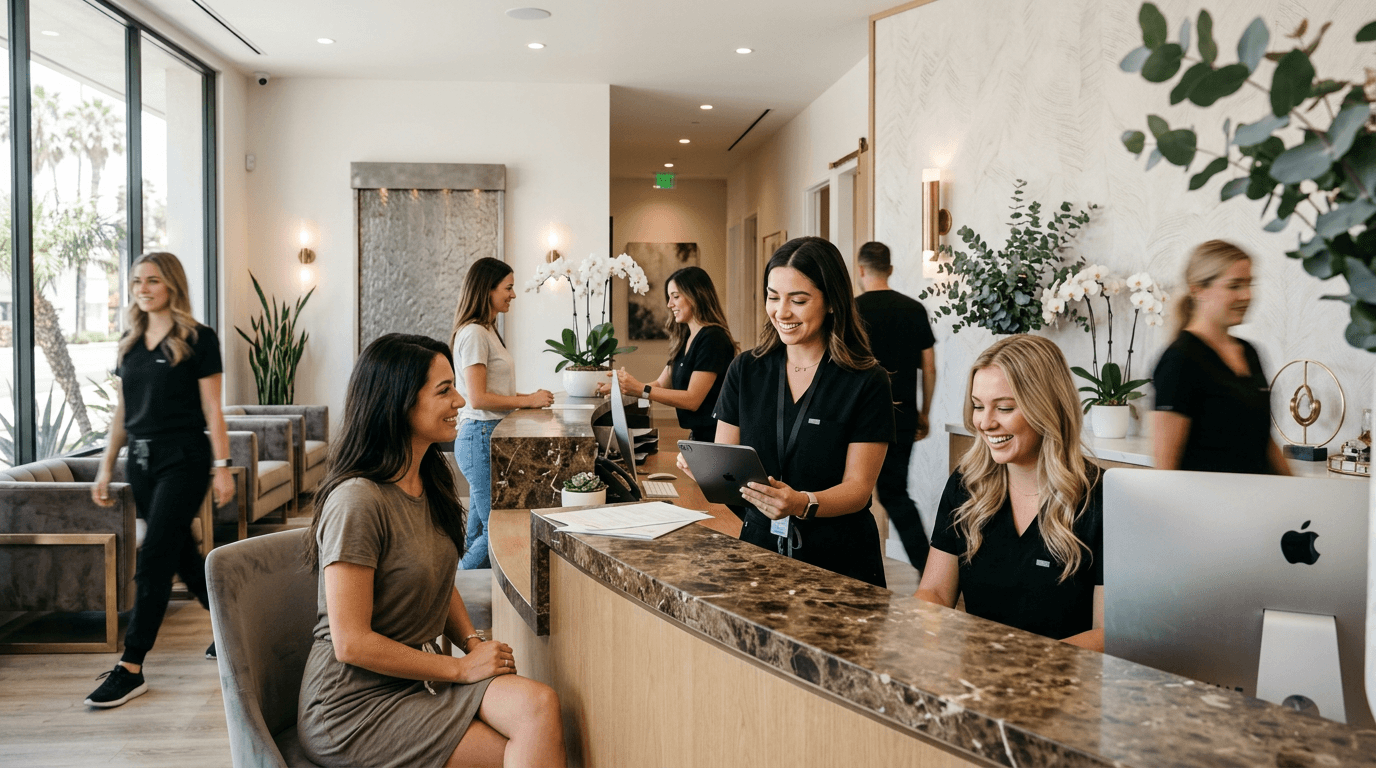
Front-desk employees often have to manage administrative responsibilities while simultaneously assisting clients in person.
When phones are ringing and digital messages are accumulating, staff may have to choose between completing back-office tasks and providing attentive service to people physically inside the center.
That tension becomes more difficult as volume increases.
Coordinating Multiple Providers and Services
A multidisciplinary wellness center may have acupuncturists, nutritionists, massage therapists, aesthetic clinicians, health coaches, or other practitioners.
Each provider may have different availability, services, appointment lengths, and workflows. Coordinating all of these details requires accurate information and a reliable scheduling process.
Maintaining Consistent Service Standards During Growth
A small wellness center can sometimes rely on individual staff members' knowledge. As the organization grows, that approach becomes less reliable.
New employees may interpret policies differently or provide inconsistent information. Standardized customer support procedures can help ensure that clients receive a consistent experience.
Managing Communication Across Multiple Locations
Multi-location wellness brands face another layer of complexity. Clients may contact different facilities while expecting the same quality of service from the overall brand.
Support teams need accurate information about each location while maintaining consistent communication standards across the organization.
Why Traditional Front-Desk Models Struggle to Scale
A traditional front desk can work extremely well for a small practice. The problem occurs when the volume of communication grows faster than the team's ability to manage it.
The Limits of Handling Every Call Internally
Front-desk employees cannot always answer every call while checking in clients, processing payments, coordinating providers, and managing the physical reception area.
When calls go unanswered, prospective clients may move on to another provider simply because they could not reach someone.
Administrative Tasks That Consume Staff Time
Scheduling, confirmations, cancellations, intake questions, appointment changes, and basic service inquiries can consume hours of staff time.
These tasks are necessary, but they do not all need to be handled by the same people responsible for the in-person client experience.
Communication Bottlenecks During Peak Hours
Certain times of day can generate significantly higher communication volume.
When several clients arrive while multiple calls and online requests come in simultaneously, the front desk becomes a communication bottleneck.
Dedicated support can provide additional capacity during these high-demand periods.
Missed Calls and Delayed Responses
A missed call is more than a missed conversation. It can represent a potential appointment, consultation, membership, or future client relationship.
Delayed responses can similarly reduce the momentum behind an inquiry. Responsive support gives clients a clearer path toward booking.
Staff Turnover and Knowledge Gaps
Wellness centers often rely heavily on experienced employees who understand the organization's services and procedures.
When someone leaves, valuable operational knowledge can leave with them. Documented workflows and structured support training reduce dependence on individual employees.
Why Adding More Front-Desk Staff Is Not Always the Best Solution
Hiring additional front-desk employees may address capacity temporarily, but it can also increase recruitment, training, scheduling, and management requirements.
A more scalable approach may be to separate responsibilities and introduce specialized customer support for appropriate communication and administrative tasks.
This allows internal employees to focus on the areas where their physical presence and direct client interaction create the most value.
Mapping the Complete Wellness Center Customer Journey
Customer support should not be viewed as a function that starts when the phone rings. It can influence almost every stage of the client journey.
Supporting Prospective Clients Before Their First Appointment
The customer experience begins before someone walks through the door.
A prospective client may have questions about services, providers, availability, memberships, or what type of appointment they need. Prompt and knowledgeable support can reduce uncertainty and help move that person toward a booking.
Managing Consultation and Booking Requests
Consultations often represent an important conversion point.
A support team can help gather basic information, explain the scheduling process, and connect prospective clients with the appropriate service or provider according to established procedures.
For clients ready to book wellness clinic appointment services, reducing unnecessary steps can make the process faster and more convenient.
Supporting Pre-Visit Communication
Once an appointment is booked, clients may still have questions.
Appointment confirmations, reminders, preparation information, directions, forms, and scheduling changes can all become part of the pre-visit communication process.
Clear communication helps clients arrive better prepared.
Improving the In-Center Experience
Customer support also affects what happens after a client arrives.
When administrative issues have already been addressed, front-desk employees can devote more attention to welcoming clients, coordinating the reception area, and supporting the in-person experience.
Managing Post-Visit Follow-Up
After an appointment, clients may need assistance scheduling their next visit, asking administrative questions, or understanding what happens next within the practice's established workflow.
Reliable follow-up keeps the communication relationship active beyond the appointment itself.
Supporting Repeat Visits and Long-Term Relationships
Wellness services frequently involve recurring visits, memberships, treatment plans, or ongoing wellness programs.
Consistent communication can make it easier for clients to continue engaging with the center instead of allowing administrative friction to interrupt the relationship.
How Customer Support Streamlines Appointment Management
Appointment management is one of the areas where specialized support can create immediate operational value. The goal is to make scheduling easier for clients while reducing repetitive workload for internal teams.
Handling New Appointment Requests
New appointment requests should be handled promptly and accurately.
Support representatives can help identify the appropriate service, provider, location, and available appointment according to the center's procedures.
Managing Rescheduling and Cancellations
Schedule changes are unavoidable. A dedicated support function can handle appropriate rescheduling and cancellation requests without requiring the front desk to interrupt other responsibilities.
This keeps calendars more organized and reduces unnecessary communication pressure.
Confirming Appointments and Reducing No-Shows
Appointment reminders and confirmations give clients an opportunity to identify scheduling problems before the appointment date.
Automated reminders combined with human support can help clients confirm, reschedule, or ask administrative questions, potentially reducing avoidable no-shows.
Answering Common Scheduling Questions
Clients may have questions about appointment duration, provider availability, service types, locations, or booking procedures.
A knowledgeable support team can answer routine questions consistently, allowing internal staff to focus on more complex responsibilities.
Managing Waitlists and Availability Requests
Popular providers and services can create waitlists.
Support representatives can help manage availability requests according to established policies, giving clients another opportunity to secure an appointment when cancellations occur.
Supporting High-Demand Services and Providers
Certain services or practitioners may generate substantially more inquiries than others.
Dedicated support gives wellness centers additional capacity to manage demand without overwhelming the employees responsible for the in-person experience.
When appointment management becomes more responsive and organized, the benefits extend beyond scheduling. Clients experience less friction, staff have fewer repetitive interruptions, and the wellness center gains a stronger operational foundation for growth.
Centralizing Communication Across Every Customer Channel
As a wellness center grows, communication rarely stays within one channel. A prospective client might discover the business through its website, ask a question through live chat, call the front desk, and later respond to a text message about an appointment. Without a coordinated system, these interactions can become fragmented.
Centralized customer support gives wellness centers a way to manage these conversations more consistently. Instead of expecting front-desk employees to monitor every channel while managing in-person clients, a dedicated support function can help organize communication around the entire customer journey.
Managing Phone Calls More Efficiently
Phone calls remain an important channel for wellness centers, particularly for clients who want immediate answers or prefer speaking with someone directly.
Dedicated support can help answer calls, handle routine inquiries, assist with scheduling, and route appropriate requests. This reduces the number of calls competing for the attention of front-desk employees.
Responding to Emails and Online Forms
Email and website forms can generate valuable inquiries, but they are easy to overlook when staff are busy with in-person responsibilities.
A structured support process ensures these requests are reviewed and addressed according to defined response standards.
Supporting Website and Live-Chat Inquiries
Website visitors are often actively researching services. A live-chat interaction can therefore be an important opportunity to answer questions and guide a prospective client toward the appropriate next step.
Prompt responses can prevent interested visitors from leaving the website without taking action.
Managing Text and Messaging-Based Communication
Text and messaging platforms have become convenient ways for clients to communicate about appointments, confirmations, and routine questions.
A dedicated support team can help manage these interactions while ensuring communication follows the wellness center's established policies.
Creating Consistent Responses Across Channels
Consistency matters regardless of how a client contacts the business.
If the information provided by phone differs from what a client receives through email or chat, confidence in the organization can suffer. Standardized knowledge bases and communication protocols help reduce these inconsistencies.
Building an Omnichannel Customer Experience
An omnichannel approach connects communication channels rather than treating them as isolated systems.
The objective is simple: clients should be able to move between channels without feeling like they are starting the conversation over each time. For growing wellness centers, this creates a more seamless experience while making communication easier to manage operationally.
How Specialized Support Improves Customer Experience
Customer experience is closely connected to accessibility. Clients want to know that when they have a question or need assistance, they can reach someone who understands the business and can help them move forward.
Specialized support can provide that accessibility while maintaining the high-touch service standards expected from modern wellness brands.
Reducing Communication Friction
Every unnecessary step can create friction.
If clients have to call multiple times, repeat information, wait for responses, or navigate unclear booking processes, they may become frustrated.
Dedicated support removes some of these obstacles by providing a clearer path from inquiry to resolution.
Providing Faster and More Consistent Responses
Responsiveness is particularly important when someone is considering a service or trying to schedule an appointment.
A support team can establish workflows designed to respond promptly while using standardized information to maintain consistency.
Personalizing Interactions at Scale
Scaling does not have to mean making communication impersonal.
Support representatives can use appropriate customer information and established workflows to make interactions more relevant. A client returning for a recurring service, for example, may require a different conversation from someone making an initial inquiry.
This is where a Holistic health virtual assistant can provide additional value by combining administrative support with a more personalized communication experience.
Maintaining Professional and Empathetic Communication
Wellness businesses often deal with personal health goals, lifestyle concerns, appearance, stress management, and other sensitive topics.
Communication should therefore be professional without sounding robotic. Empathy and active listening can make clients feel respected, especially when they are uncertain about which service or practitioner is right for them.
Creating Continuity Across Customer Touchpoints
A client's experience includes every interaction with the business—not only the service itself.
Consistent communication before an appointment, during scheduling, and after a visit creates continuity. Clients are more likely to feel that they are dealing with one coordinated organization rather than disconnected departments.
Turning Service Interactions Into Relationship-Building Opportunities
Customer support conversations can also reveal opportunities to strengthen relationships.
A question about scheduling may lead to a better understanding of a client's preferences. A recurring inquiry may reveal a need for clearer information. A follow-up conversation may help keep a client engaged.
Support should not become aggressive selling. Instead, it should make it easier for clients to access relevant services and continue their relationship with the wellness center.
Using Customer Support to Protect Staff Productivity
One of the most practical reasons to introduce specialized customer support is to protect the productivity of the internal team.
Growth should increase capacity—not simply increase the number of interruptions employees have to manage every day.
Reducing Repetitive Administrative Interruptions
Repeated questions about appointments, availability, policies, directions, and basic service information can consume significant amounts of staff time.
Moving appropriate tasks to a dedicated support function reduces these interruptions.
Allowing Providers to Focus on Client Care
Practitioners should be able to focus on the clients in front of them.
When providers are repeatedly interrupted by calls, messages, or scheduling questions, attention is divided between client care and administration. Specialized support creates a stronger separation between those responsibilities.
Reducing Front-Desk Workload
The front desk remains important, but its role can become more focused.
Instead of managing every communication channel while simultaneously welcoming clients, front-desk employees can concentrate on the in-center experience and essential on-site responsibilities.
Creating Clear Ownership of Communication Tasks
Communication becomes easier to manage when everyone knows who owns each responsibility.
A dedicated support model can establish clear ownership for appointment inquiries, messages, confirmations, follow-ups, and escalation requests.
Helping Managers Focus on Higher-Value Responsibilities
Practice and operations managers often become the default escalation point for communication problems.
With documented processes and dedicated support, managers can spend more time on staffing, service quality, operational improvements, and growth initiatives.
Preventing Administrative Work From Expanding With Every New Client
A scalable support model should prevent every new client from automatically creating more work for the same internal employees.
This is particularly important for growing wellness centers where recurring memberships, multiple services, and repeat visits can continuously increase communication volume.
How Technology Makes Wellness Center Customer Support More Scalable
Technology can help a specialized support team handle higher communication volumes without sacrificing organization.
The key is to use technology as an operational enabler while keeping human oversight where judgment and empathy are required.
Integrating Support With Scheduling and Practice Management Systems
Connecting customer support with appropriate scheduling and practice management systems can make it easier to check availability, coordinate appointments, and maintain accurate information.
Integrations can also reduce duplicate data entry and unnecessary back-and-forth between departments.
Using Automated Appointment Reminders
Automated reminders can help clients remember upcoming appointments and provide opportunities to confirm or reschedule.
When combined with human support, automation can handle routine reminders while representatives step in when a client needs assistance.
Creating Centralized Customer Information
Centralized information gives authorized support personnel greater visibility into the client journey.
This can help representatives understand previous interactions and provide more relevant assistance without requiring clients to repeat information unnecessarily.
Building Knowledge Bases for Common Questions
A knowledge base can provide representatives with current answers to frequently asked questions.
It can cover services, appointment processes, policies, operating procedures, locations, and other approved information. Regular updates are essential to prevent outdated information from reaching clients.
Using AI-Assisted Support With Human Oversight
AI can assist with categorizing inquiries, drafting responses, summarizing conversations, identifying common questions, and supporting routine workflows.
However, human oversight remains important, particularly when communications involve sensitive information or situations that require professional judgment. AI should support the team rather than replace appropriate human decision-making.
Connecting Customer Support Data With Operational Systems
Support data can reveal important patterns.
When communication data is connected appropriately with operational information, managers can identify demand spikes, common inquiries, scheduling bottlenecks, and opportunities to improve workflows.
Maintaining Privacy and Security in Customer Support
Wellness centers may handle personal information that clients reasonably expect to be protected. As communication expands across phone, email, messaging, digital forms, and scheduling systems, privacy-conscious processes become increasingly important.
Why Wellness Centers Need Privacy-Conscious Communication Workflows
A growing number of communication channels creates more opportunities for information to be mishandled.
Clear procedures help determine what information can be communicated through each channel and how sensitive requests should be handled.
Protecting Sensitive Customer and Patient Information
Support teams should understand their responsibilities when handling personal or health-related information.
Appropriate training and documented procedures can help employees recognize sensitive information and handle it according to the organization's applicable privacy requirements.
Establishing Role-Based Access
Not every support employee needs access to every customer record or system function.
Role-based access can limit information and permissions according to job responsibilities, reducing unnecessary exposure.
Training Support Teams on Appropriate Information Handling
Privacy should be part of ongoing training, not simply an onboarding topic.
Support personnel should understand verification procedures, appropriate documentation, secure communication practices, and escalation requirements.
Defining Secure Escalation and Documentation Procedures
Sensitive or complex requests need clear escalation pathways.
Documenting who receives an issue, what information should be recorded, and how the client should be informed creates a more consistent and accountable process.
Balancing Accessibility With Privacy Requirements
The goal is not to make communication difficult in the name of security.
A strong support model balances accessibility with appropriate privacy controls so clients can receive timely assistance without compromising the responsible handling of their information.
For growing wellness centers, this balance becomes increasingly important. The more clients, services, providers, and locations a business adds, the more valuable a structured support infrastructure becomes. Centralized communication, specialized personnel, technology, and privacy-conscious processes can work together to create a scalable foundation for continued growth.
Connecting Customer Support With Wellness Center SOPs
Customer support becomes far more valuable when it operates from the same playbook as the rest of the wellness center. Without documented procedures, representatives may rely on personal experience, which can lead to inconsistent answers and uneven client experiences.
Connecting support directly to wellness center SOPs creates a repeatable system for handling everyday communication while giving managers greater control over quality and consistency.
Standardizing Appointment Communication
Appointment communication should follow clearly defined procedures. These can cover new bookings, confirmations, cancellations, rescheduling, waitlists, and follow-up appointments.
Standardized processes make it easier for support representatives to provide accurate information and help clients move through scheduling without unnecessary delays.
Documenting Escalation Procedures
Not every client request should be handled by customer support.
SOPs should clearly explain when a question needs to be escalated to a practitioner, manager, or another qualified team member. This is particularly important when communication involves health-related concerns, complaints, sensitive information, or requests requiring professional judgment.
Creating Approved Responses for Common Questions
Wellness centers receive many recurring questions. Having approved responses for common inquiries gives representatives a reliable starting point.
These resources can cover services, scheduling, memberships, locations, general policies, and other administrative topics while helping ensure that clients receive consistent information.
Updating Support Processes When SOPs Change
A new service, provider, membership option, pricing policy, or booking procedure can change how support teams communicate with clients.
Whenever an SOP changes, the support process should be updated at the same time. This prevents representatives from relying on outdated information.
Ensuring Support Teams Follow Current Procedures
Documentation alone does not guarantee consistency.
Regular training, quality reviews, coaching, and access to current knowledge resources can help ensure that support personnel continue following the latest procedures.
Turning SOPs Into Repeatable Customer Experiences
The ultimate purpose of connecting support with SOPs is consistency.
When a client contacts the wellness center today, next month, or through another location, the experience should follow the same core standards. This makes growth easier to manage because the business is no longer relying entirely on individual employee knowledge.
How Customer Support Helps Wellness Centers Increase Revenue
Customer support is often viewed as a cost center, but its influence can extend directly into revenue-generating activities.
Every unanswered inquiry, delayed response, or confusing booking process can represent a missed opportunity. A specialized support function helps wellness centers capture more of the demand they are already generating.
Capturing More Inbound Leads
Marketing can bring prospective clients to a wellness center, but marketing alone does not turn every inquiry into revenue.
Someone who calls, submits a form, or sends a message may be ready to book—or may simply need one question answered first. Responsive support helps ensure those opportunities are not lost because nobody was available to respond.
Improving Inquiry-to-Appointment Conversion
The time between an inquiry and a booking can be important.
When clients receive clear answers and immediate assistance with the next step, they have fewer reasons to abandon the process. A support team can help guide qualified inquiries toward the appropriate appointment according to the center's procedures.
Reducing Lost Opportunities From Missed Calls
Missed calls can represent potential consultations, services, memberships, or repeat appointments.
A dedicated support team can help reduce the number of inquiries that go unanswered, particularly during periods when the in-house team is occupied with clients.
Increasing Appointment Utilization
Effective support can also help wellness centers make better use of available appointment capacity.
Managing cancellations, waitlists, availability requests, and rescheduling efficiently can make it easier to fill openings when appropriate.
Supporting Repeat Bookings
Existing clients already understand the value of the wellness center. Making it easier for them to schedule their next visit can encourage continued engagement.
Support teams can assist with recurring appointments, follow-up scheduling, memberships, and other appropriate booking processes.
Creating Opportunities for Cross-Selling and Service Education Without High-Pressure Tactics
Customer support can help clients discover relevant services without turning every conversation into a sales pitch.
For example, a client asking about a recurring wellness service may benefit from learning about related offerings or membership options. The focus should remain on useful education and helping clients find appropriate services—not aggressive selling.
Customer Support as a Patient and Client Retention Strategy
Acquiring new clients is only one component of sustainable growth. Wellness centers also need systems that encourage existing clients to continue returning.
Customer support can contribute to retention by keeping communication convenient before, between, and after visits.
Why Post-Visit Communication Influences Loyalty
The relationship does not necessarily end when a client leaves the center.
Follow-up communication can help clients navigate their next administrative step, schedule future visits, or resolve routine questions. Consistent communication reinforces the sense that the wellness center remains accessible.
Making Repeat Booking Easier
A complicated booking process can discourage clients from returning.
When support is readily available to assist with scheduling, clients can move from deciding they want another service to actually securing an appointment with fewer unnecessary steps.
Supporting Membership and Subscription Retention
Membership-based wellness models create recurring relationships, but they also introduce recurring administrative questions.
Clients may need help understanding appointment scheduling, membership logistics, billing-related processes, or service availability. Dedicated support can help manage appropriate inquiries and reduce avoidable friction.
Re-Engaging Clients Who Have Become Inactive
Some clients simply stop booking without formally ending their relationship.
With appropriate consent and practice-approved communication strategies, support teams can help identify inactive clients and facilitate relevant re-engagement campaigns or booking opportunities.
Creating Consistent Follow-Up Experiences
Follow-up should not depend entirely on which employee happens to handle the interaction.
Documented workflows help create a consistent experience across different clients, providers, and locations.
Building Long-Term Customer Relationships
When communication is responsive, convenient, and personalized, customer support becomes part of the relationship rather than merely an administrative function.
For wellness centers, this can help create the consistency needed to support long-term client engagement.
Building the Right Customer Support Model for Your Wellness Center
There is no single support structure that works for every wellness center. The right model depends on communication volume, operating hours, number of locations, services, internal staffing, technology, and growth objectives.
When an Internal Support Team Makes Sense
An internal team may be appropriate for organizations that require close day-to-day control, have sufficient communication volume to support dedicated employees, or need representatives physically present at the facility.
This model provides direct oversight but also carries recruitment, training, scheduling, and management responsibilities.
When Outsourced Customer Support Makes Sense
Outsourcing can provide additional capacity without requiring the wellness center to recruit an entire internal support team.
It can be particularly useful when inquiry volume fluctuates, internal employees are overloaded, or the business needs specialized support capabilities without expanding its physical front desk.
When a Hybrid Model Is the Best Option
A hybrid approach can combine the strengths of both models.
The internal team can manage in-person client interactions and complex situations, while an external support team handles defined communication and administrative responsibilities.
Determining the Right Coverage Hours
Support coverage should reflect when clients actually communicate with the business.
Some wellness centers may need extended coverage because inquiries arrive outside traditional operating hours. Others may need additional capacity primarily during peak daytime periods.
Defining Which Tasks Support Staff Should Own
Clear task ownership prevents confusion.
Responsibilities might include appointment inquiries, confirmations, rescheduling, general service information, digital messages, follow-up coordination, and other administrative activities defined by the practice.
Establishing Clinical Escalation Boundaries
Wellness centers offering health-related services need clear boundaries between administrative support and professional care.
Support personnel should know when to escalate a question and who should receive it. This protects both the client experience and the integrity of the practice's professional workflows.
Choosing a Specialized Customer Support Partner
Selecting a support partner should involve more than comparing hourly rates.
The provider becomes an extension of the wellness center's brand, so its training, communication standards, technology, security practices, and scalability all matter.
Experience With Wellness and Healthcare Environments
A partner familiar with wellness or healthcare environments is more likely to understand the sensitivity and complexity of client communication.
This can reduce the amount of industry education required before representatives can effectively support the business.
Staff Training and Industry Knowledge
Ask how representatives are trained and how ongoing education is managed.
A strong partner should be able to demonstrate how its team learns the wellness center's services, terminology, SOPs, escalation procedures, and communication expectations.
Communication Quality and Brand Alignment
The support team should sound like an extension of the wellness center.
Tone, professionalism, empathy, and communication style should align with the brand—particularly for high-end wellness centers where the client experience is a major differentiator.
Technology and System Integration
Evaluate whether the provider can work with the systems the wellness center already uses.
Scheduling platforms, practice management tools, communication systems, customer databases, and other technology can influence how efficiently support operates.
Privacy and Security Practices
Ask how customer and patient information is handled.
The provider should have appropriate processes for access control, secure communication, staff training, documentation, and applicable privacy obligations.
Reporting and Performance Visibility
A wellness center should be able to understand what its support operation is accomplishing.
Useful reporting may include inquiry volume, response times, appointment requests, resolution rates, missed-call trends, escalation activity, and customer feedback.
Scalability and Multi-Location Capabilities
The support partner should be able to grow with the business.
If the wellness center adds providers, services, or locations, the support infrastructure should be capable of accommodating that growth without forcing the organization to rebuild its communication model from scratch.
Service-Level Agreements and Accountability
Clear service expectations create accountability.
A support agreement can define response standards, coverage expectations, responsibilities, reporting, escalation processes, and other measurable requirements.
For a growing wellness center, the right customer support partner should ultimately function as an extension of the organization—not simply as a company answering phones. When support is aligned with SOPs, technology, brand standards, and growth objectives, it can help transform everyday communication into a scalable operational advantage.
A Practical Implementation Roadmap for Wellness Centers
Adding specialized customer support is most effective when it is approached as an operational transformation rather than simply hiring another person to answer calls. A clear implementation roadmap helps wellness centers identify what is creating friction, establish responsibilities, and build a support model that can grow with the business.
Step 1 — Audit Your Existing Customer Support Workflow
Start by documenting how customers currently contact the wellness center.
Review phone calls, emails, website forms, chat, text messages, social media inquiries, appointment requests, cancellations, and follow-ups. Identify who handles each interaction and how requests move through the organization.
Step 2 — Identify Communication Bottlenecks
Look for points where communication slows down.
Missed calls, unanswered messages, long response times, scheduling backlogs, and repeated questions can reveal where the current model is struggling.
These bottlenecks provide a practical starting point for improvement.
Step 3 — Categorize Support Requests
Not every inquiry requires the same response.
Separate requests into categories such as appointment scheduling, general service information, membership questions, cancellations, administrative requests, technical issues, and matters requiring practitioner involvement.
Categorization makes it easier to determine which tasks can be delegated or automated.
Step 4 — Define Roles, Responsibilities, and Escalation Paths
Clearly establish who owns each type of communication.
Internal staff may manage in-person client interactions, while dedicated support handles routine calls and scheduling. Practitioners can remain responsible for questions requiring professional judgment.
Clear escalation paths prevent support representatives from handling requests outside their scope.
Step 5 — Document Support SOPs and Approved Responses
Create SOPs for common situations and develop approved responses for frequently asked questions.
These resources help representatives communicate consistently and make it easier to train new team members as the wellness center grows.
Step 6 — Integrate Customer Support Technology
Connect support workflows with appropriate scheduling, communication, customer management, and practice-management systems.
Automation can handle routine reminders and notifications, while integrated systems give support personnel better access to the information they need within their authorized roles.
Step 7 — Train Internal and External Support Teams
Training should cover customer service, brand voice, wellness services, scheduling procedures, SOPs, privacy expectations, escalation rules, and technology.
If the wellness center uses an outsourced provider or a Holistic health virtual assistant, that team should receive the same operational context needed to represent the brand effectively.
Step 8 — Launch With a Controlled Pilot
Rather than immediately transferring every customer interaction, begin with a defined group of tasks or communication channels.
A pilot allows the wellness center to identify problems, gather feedback, adjust SOPs, and confirm that the support workflow works before expanding it.
Step 9 — Measure Performance and Optimize Continuously
Once the system is operating, measure its performance.
Useful metrics can include response time, missed calls, appointment conversion, cancellation handling, no-show rates, inquiry volume, resolution time, customer satisfaction, and staff time saved.
The objective is continuous improvement. As the wellness center grows, its support model should evolve with it.
Summary — Why Specialized Customer Support Is Essential for Scaling Wellness Centers
For a growing wellness center, customer support is much more than answering phones. It connects marketing, scheduling, service delivery, client experience, and retention.
When communication is designed as a scalable operational function, wellness centers can handle more demand without placing every additional task on the same internal employees.
From Front-Desk Overload to Distributed Support
Instead of requiring the front desk to manage every interaction, appropriate responsibilities can be distributed across specialized support, internal teams, automation, and practitioners.
From Missed Communication to Faster Engagement
A structured support system can help reduce missed calls and delayed responses, giving prospective and existing clients a clearer path toward getting assistance or scheduling an appointment.
From Administrative Friction to Operational Efficiency
Removing repetitive communication tasks from internal teams allows employees to spend more time on responsibilities that directly contribute to the in-center experience.
From Inconsistent Service to Standardized Customer Experiences
SOPs, training, knowledge bases, and defined workflows create consistency across communication channels, providers, and locations.
From One-Time Visits to Long-Term Relationships
Responsive follow-up, convenient scheduling, membership support, and ongoing communication can help wellness centers maintain relationships beyond a single appointment.
From Manual Processes to Scalable Infrastructure
Technology and specialized support can work together to handle growing communication volume without requiring every process to remain manual.
From Customer Support Cost Center to Strategic Growth Function
The most important shift is how leadership views customer support.
When support helps capture inquiries, facilitate bookings, reduce communication friction, improve retention, and protect staff productivity, it becomes part of the infrastructure that enables growth.
For modern wellness centers, investing in that infrastructure can be an important step toward scaling efficiently while preserving the personalized experience that makes wellness services valuable.
FAQs About Customer Support for Wellness Centers
What is specialized customer support for a wellness center?
Specialized customer support is a service designed around the communication, scheduling, administrative, and client-experience needs of wellness centers. It combines customer service capabilities with knowledge of wellness workflows and practice-specific procedures.
Why does a growing wellness center need dedicated customer support?
As client volume increases, phone calls, messages, booking requests, and administrative questions can overwhelm an internal team. Dedicated support adds communication capacity while allowing employees to focus on higher-value responsibilities.
What tasks can a wellness center customer support team handle?
Depending on the center's SOPs, support can handle appointment inquiries, scheduling, rescheduling, cancellations, confirmations, general service questions, digital inquiries, follow-up coordination, and other administrative tasks.
Can customer support handle appointment scheduling and rescheduling?
Yes. Support representatives can assist clients with scheduling, changes, cancellations, waitlists, and availability requests according to the wellness center's established procedures. This makes it easier for clients to book wellness clinic appointment services without unnecessarily involving practitioners.
How does customer support help reduce missed appointments?
Support teams can assist with confirmations, reminders, rescheduling, and communication before appointments. Automated reminders can also help clients identify scheduling conflicts before their appointment date.
Can specialized support improve lead-to-appointment conversion?
It can help by reducing delays between an inquiry and the next step. When prospective clients receive timely answers and convenient booking assistance, there are fewer communication barriers between initial interest and an appointment.
How does customer support help reduce front-desk workload?
It can take responsibility for appropriate phone calls, messages, scheduling requests, and repetitive administrative questions. This allows front-desk employees to focus more closely on clients physically present at the center.
Can customer support teams work with multiple wellness center locations?
Yes. A centralized support team can work across multiple locations when it has access to accurate information about each facility, including services, providers, schedules, policies, and location-specific procedures.
How should wellness centers protect customer and patient information?
Wellness centers should establish appropriate privacy and security procedures based on the type of information they handle and the laws and regulations applicable to their operations. Access controls, staff training, secure communication, appropriate documentation, and defined escalation procedures can help protect sensitive information.
Can AI automate wellness center customer support?
AI can assist with certain repetitive tasks, such as categorizing inquiries, drafting responses, providing information from approved knowledge bases, and supporting appointment reminders. Human oversight remains important for sensitive requests, complex situations, and matters requiring professional judgment.
Should customer support answer health-related questions?
Customer support should remain within its defined role. Representatives can communicate approved administrative information, but questions requiring clinical or professional judgment should be routed to the appropriate qualified practitioner.
How should clinical or sensitive questions be escalated?
The wellness center should establish documented escalation procedures that identify which situations require additional review, who receives the request, what information should be documented, and how the client should be informed about the next step.
Should a wellness center outsource customer support or build an internal team?
The right approach depends on communication volume, staffing resources, budget, operating hours, technology, and growth plans. Some centers benefit from internal teams, others from outsourcing, while a hybrid model can combine internal oversight with external support capacity.
How much does specialized customer support cost?
Costs vary based on factors such as coverage hours, communication volume, number of channels, technology requirements, staffing model, services provided, and level of specialization. Wellness centers should evaluate cost alongside measurable operational benefits rather than looking only at the hourly or monthly price.
How can a wellness center measure customer support ROI?
Relevant metrics can include appointment conversion, missed calls, response times, appointment utilization, no-show rates, repeat bookings, customer satisfaction, staff time saved, and support volume. Comparing these metrics before and after implementation can provide a clearer picture of the investment's operational impact.
When should a growing wellness center invest in dedicated customer support?
Common signs include increasing missed calls, communication backlogs, slow responses, front-desk burnout, growing appointment volume, multiple locations, inconsistent client experiences, and staff spending too much time on repetitive administrative work.
How Can V-Assist Help With Customer Support for Your Wellness Center?
Scaling a wellness center should not mean asking the same front-desk team to absorb every new call, message, booking request, and administrative task.
V-Assist can help wellness centers build a more responsive and scalable customer support function around their existing operations. By supporting routine communication and administrative workflows, a dedicated team can help reduce pressure on internal employees while creating a smoother experience for prospective and existing clients.
Whether your organization operates a holistic health practice, wellness clinic, spa, multidisciplinary center, or growing multi-location brand, the right support structure can help you manage communication more efficiently as demand increases.
The objective is simple: make it easier for clients to connect with your wellness center while allowing your internal team to focus on delivering an exceptional in-person experience.
If your team is struggling with missed calls, booking backlogs, repetitive inquiries, or communication overload, it may be time to build a support model designed for growth.