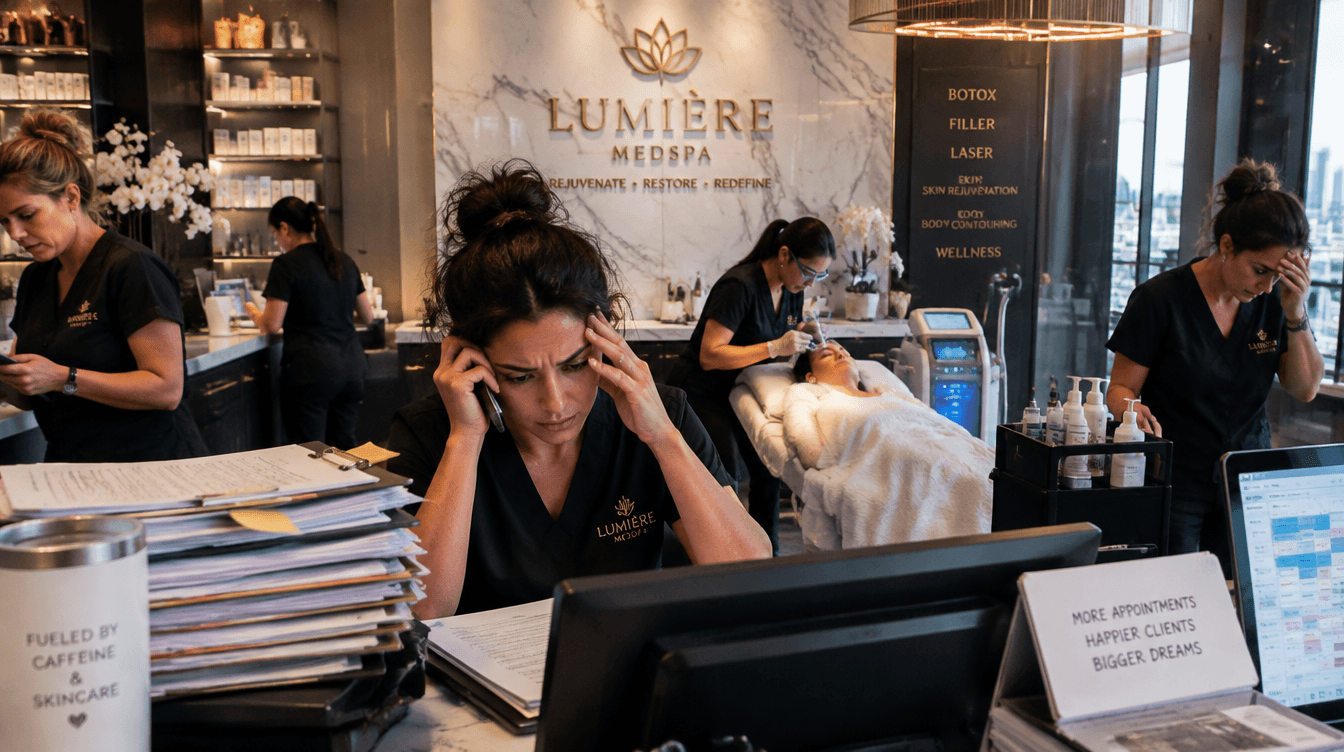
“Providing excellent dermatology clinic customer service requires more than delivering quality treatments. Dermatology teams must also manage appointment requests, patient records, insurance requirements, follow-up communications, and daily administrative responsibilities. When these tasks pile up, even experienced professionals can struggle to maintain a healthy work-life balance.” - Rhane Handisides
Virtual medical support offers dermatology practices a practical way to reduce administrative pressure without compromising patient care. By delegating repetitive tasks to trained remote professionals, clinics can improve operational efficiency, create smoother patient experiences, and give their in-house teams more time to focus on clinical responsibilities.
Why Dermatology Teams Face Increasing Administrative Pressure
Dermatology practices often handle a wide range of appointments, from routine skin consultations and acne treatments to biopsies, cosmetic procedures, and chronic skin condition management. Each service may require different preparation, documentation, scheduling, and follow-up procedures.
As patient volumes increase, administrative responsibilities grow alongside them. Staff members may need to verify insurance information, process referrals, coordinate prior authorizations, update electronic health records (EHRs), and respond to patient inquiries throughout the day.
These responsibilities can become overwhelming when a clinic operates with limited staffing. Front-desk employees may struggle to answer calls while assisting patients in person, while nurses and medical assistants may find themselves completing documentation after their scheduled shifts.
Without an effective workload management strategy, administrative tasks can gradually take time away from patient care and contribute to ongoing employee fatigue.
How Patient Demand, Scheduling Challenges, and Documentation Overload Affect Staff Well-Being
High patient demand is often a positive sign for a growing dermatology practice, but it can create operational challenges when staffing and workflows fail to keep pace.
Appointment requests may arrive through phone calls, website forms, patient portals, and email. Managing these requests across multiple channels can overwhelm front-desk staff, particularly when patients need urgent consultations, procedure appointments, or follow-up visits.
Documentation creates another source of pressure. Clinical professionals must maintain accurate patient records while balancing consultations, treatment preparation, and other responsibilities. When documentation falls behind, staff members may need to stay late or complete unfinished work during breaks.
These challenges can affect concentration, job satisfaction, and the quality of interactions with patients. A well-organized dermatology appointment booking process, supported by trained remote personnel, can help reduce scheduling bottlenecks and distribute administrative work more effectively.
The Hidden Costs of Staff Burnout in Dermatology Clinics
Staff burnout affects more than employee morale. It can also create financial and operational problems that threaten the long-term stability of a dermatology practice.
When employees become exhausted, clinics may experience higher absenteeism, increased turnover, slower administrative processing, and inconsistent patient communication. Replacing experienced employees also requires time and money for recruitment, onboarding, and training.
Burnout can affect the patient experience, too. Delayed responses, scheduling errors, longer waiting times, and missed follow-ups may reduce patient satisfaction and weaken trust in the practice.
There is also an opportunity cost. When qualified clinicians spend significant time on routine administrative tasks, they have less capacity to focus on consultations, treatment planning, and other clinical responsibilities.
Addressing burnout early helps practices protect their workforce while improving operational consistency. Rather than expecting employees to manage increasingly demanding workloads, practice leaders should evaluate which tasks can be simplified, automated, or delegated.
How Virtual Medical Support Can Help Dermatology Practices Operate More Efficiently
Virtual medical support allows dermatology practices to delegate appropriate administrative and coordination tasks to trained remote professionals. Depending on their training, authorized access, and the clinic's workflows, these professionals can assist with appointment scheduling, patient intake coordination, insurance verification, routine follow-up communications, and documentation support.
For example, a virtual medical assistant can manage incoming appointment requests, update scheduling records, and coordinate reminders while in-house staff focus on patients arriving at the clinic.
Remote medical scribes may also help eligible clinicians with documentation, subject to appropriate supervision, privacy safeguards, and the practice's policies.
The goal is not to replace the clinical team. It is to help each employee spend more time on responsibilities that require their specific expertise.
With clear delegation procedures and appropriate technology, virtual medical support can help dermatology clinics manage growing patient volumes without automatically increasing the workload of existing employees.
Understanding Staff Burnout in Dermatology Practices
Staff burnout is a workplace challenge that develops when prolonged job-related stress is not adequately managed. In dermatology practices, it may result from a combination of high patient volumes, demanding documentation requirements, scheduling pressures, and insufficient administrative support.
Understanding how burnout develops is an important first step toward creating a more sustainable working environment.
What Is Staff Burnout in a Dermatology Clinic?
Staff burnout is a state associated with chronic workplace stress that has not been successfully managed. It is commonly characterized by emotional exhaustion, increased mental distance or cynicism toward work, and reduced professional effectiveness.
In a dermatology clinic, burnout may develop when employees repeatedly face more tasks than they can reasonably complete within their working hours.
For example, a medical assistant may spend the day preparing patients, assisting with procedures, and managing clinical supplies, only to finish the evening catching up on documentation. Meanwhile, a front-desk employee may have to manage a continuous stream of calls, appointment changes, and billing questions without sufficient backup.
When these conditions persist, employees may find it increasingly difficult to remain engaged and satisfied with their work.
Common Signs of Burnout Among Dermatologists, Nurses, Medical Assistants, and Front-Desk Staff
Burnout can affect different members of the dermatology team in different ways.
- Dermatologists: Persistent fatigue, reduced concentration, and frustration with administrative demands that interrupt clinical work.
- Nurses and nurse practitioners: Emotional exhaustion, difficulty balancing patient care with documentation, and reduced satisfaction with daily responsibilities.
- Physician assistants: Growing frustration with high patient volumes, incomplete records, and limited time for patient education.
- Medical assistants: Feeling rushed while preparing patients, coordinating procedures, and maintaining accurate records.
- Front-desk staff: Increased stress from constant phone calls, appointment changes, patient complaints, and competing administrative priorities.
Practice leaders should also watch for increased absenteeism, frequent overtime, declining engagement, and rising turnover intentions.
These signs do not automatically establish that an employee is experiencing burnout, but they can indicate that workloads and workplace conditions need attention.
The Difference Between Temporary Work Stress and Chronic Occupational Burnout
Temporary work stress often occurs during unusually busy periods, such as seasonal demand spikes, staff absences, or the introduction of a new scheduling system. With adequate recovery time and appropriate support, employees may return to their normal level of functioning.
Chronic occupational burnout is different. It develops when workplace pressures remain unresolved over time, leaving employees feeling persistently exhausted, detached, or less effective.
For instance, one unusually busy clinic day may be manageable. However, repeatedly working late because of incomplete patient records or consistently handling excessive appointment requests without support can create a more serious, ongoing problem.
Dermatology practice leaders should therefore look beyond short-term productivity figures. They should also assess overtime patterns, staffing capacity, task distribution, and employee feedback to identify persistent sources of strain.
How Administrative Overload Contributes to Emotional Exhaustion and Reduced Job Satisfaction
Administrative overload can make employees feel as though they are constantly working without making meaningful progress.
A receptionist might spend hours answering calls and rescheduling appointments, only to return to a growing queue of unanswered messages. A clinician may complete several consultations but still face a backlog of patient documentation and insurance-related tasks.
These repetitive demands can reduce opportunities for meaningful patient interaction and increase frustration. Employees may feel that their working day is controlled by unfinished tasks rather than their professional priorities.
Delegating suitable administrative responsibilities to virtual medical support can help break this cycle. By redistributing routine work, clinics can create more manageable schedules and allow in-house employees to focus on their core responsibilities.
Why Dermatology Practices Need a Sustainable Approach to Workload Management
Hiring additional employees is not always the only solution to workload problems. Practices also need to examine how work is assigned, which processes create unnecessary delays, and whether existing staff members are spending too much time on tasks that could be handled differently.
A sustainable workload management strategy combines realistic staffing levels, standardized procedures, appropriate technology, and clear accountability.
Virtual support can become part of this strategy by providing flexible administrative capacity when patient communications, scheduling, or documentation requirements increase. However, it should complement—not replace—adequate staffing, reasonable workloads, and supportive management practices.
What Is Virtual Medical Support for Dermatology?
Virtual medical support refers to remote professionals who assist dermatology practices with approved administrative, coordination, and documentation responsibilities. Depending on their qualifications and the clinic's requirements, they may work as virtual medical assistants, remote medical scribes, or specialized administrative support personnel.
Their purpose is to help clinics manage daily operations more efficiently while allowing on-site teams to concentrate on direct patient care.
Defining Virtual Medical Support and Its Role in Dermatology Operations
Virtual medical support uses secure communication tools, scheduling systems, and authorized healthcare software to complete designated tasks remotely.
For dermatology clinics, this may include organizing appointment requests, coordinating patient intake, verifying insurance information, preparing records for review, and managing routine administrative follow-ups.
Because dermatology practices handle different appointment types and treatment workflows, remote support should be trained around the clinic's specific procedures. A practice that performs medical dermatology consultations may have different scheduling and documentation requirements from one that also offers cosmetic treatments.
What Does a Virtual Medical Assistant Do for a Dermatology Practice?
A Virtual medical assistant for dermatology can support the administrative processes that keep a clinic running smoothly.
Depending on the assigned role, responsibilities may include:
- Managing appointment requests, confirmations, cancellations, and rescheduling.
- Coordinating digital intake forms and checking whether required administrative information has been received.
- Verifying insurance details and tracking prior authorization requests.
- Organizing patient records and preparing documentation for clinician review.
- Managing approved follow-up communications and routing patient questions to the appropriate staff member.
- Monitoring administrative task queues and reporting unresolved issues.
For example, a virtual medical assistant may coordinate a patient's appointment and confirm that intake paperwork has been submitted before the visit. This reduces the administrative work that in-house employees need to complete immediately before the consultation.
Clinical decisions, diagnosis, prescribing, and other responsibilities requiring professional credentials must remain with appropriately licensed and authorized personnel.
Virtual Medical Assistants vs. In-House Administrative Staff
Virtual and in-house staff can perform complementary roles, but they differ in how and where they provide support.
In-house employees are physically available to greet patients, assist with check-in, coordinate on-site activities, and respond to issues that require immediate attention within the clinic.
Virtual medical assistants can handle suitable tasks that do not require a physical presence, such as appointment coordination, administrative record updates, and routine patient communications.
A hybrid model can be particularly useful. The on-site team manages face-to-face interactions, while remote personnel help process administrative work in the background.
The right arrangement depends on patient volume, software compatibility, privacy requirements, and the tasks the clinic needs to delegate.
Virtual Medical Support vs. General Virtual Assistant Services
General virtual assistants may provide valuable support with email management, calendar organization, data entry, and customer service. However, dermatology practices often require additional knowledge of healthcare workflows and patient privacy obligations.
Specialized virtual medical support should understand the clinic's scheduling procedures, escalation rules, terminology, and documentation standards. Training should also cover secure handling of patient information and the limits of the assistant's role.
This distinction matters because a scheduling error or mishandled patient inquiry can disrupt clinical operations.
When evaluating providers, dermatology practice leaders should assess relevant healthcare experience, security controls, training procedures, supervision arrangements, and the ability to work with the clinic's existing systems.
Which Dermatology Tasks Can Be Managed Remotely and Which Require On-Site Clinical Staff?
Many administrative responsibilities can be handled remotely when the appropriate access controls and workflows are in place.
Remote tasks may include appointment scheduling, digital intake coordination, insurance verification, authorization tracking, administrative documentation, and approved patient communications.
Other responsibilities require an on-site presence or appropriately licensed clinical personnel. These include physical examinations, biopsies, injections, specimen collection, treatment delivery, and hands-on assistance during procedures.
The distinction should be documented in a task delegation policy. Remote personnel must know which questions they can answer, which tasks require clinician approval, and when an issue must be escalated immediately.
Practices must also verify applicable privacy, security, licensing, and supervision requirements before allowing remote personnel to access patient information or participate in clinical workflows.
Strategy #1: Reduce Administrative Overload Through Task Delegation
One of the most practical ways to reduce staff burnout is to identify routine tasks that consume valuable time and assign them to the appropriate team members.
Effective delegation does not mean transferring every administrative responsibility to a remote worker. It means creating a clear division of responsibilities so that each employee can focus on the work best suited to their role.
Identify Repetitive Administrative Tasks That Consume Staff Time
Begin by reviewing a typical clinic day. Identify activities that repeatedly interrupt patient care or require employees to stay late.
Common examples include answering routine appointment inquiries, processing intake forms, checking insurance details, tracking authorization requests, and updating administrative records.
Practice managers can ask employees to record how much time they spend on these tasks over one or two representative weeks. The results can reveal where delays occur and which responsibilities are suitable for delegation.
Prioritize tasks that are repetitive, rules-based, time-consuming, and straightforward to monitor.
Delegate Appointment Scheduling and Calendar Management
Scheduling is a strong starting point because it involves recurring administrative work that can often be completed remotely.
A virtual assistant can manage approved appointment requests, confirm availability, process rescheduling requests, and maintain accurate calendar records. The clinic should provide clear scheduling rules for appointment types, provider availability, procedure durations, and urgent concerns.
For example, routine follow-up appointments may follow established scheduling guidelines, while requests involving potentially urgent symptoms should be routed to qualified clinical staff rather than handled through administrative judgment.
Outsource Patient Intake Coordination and Digital Form Management
Incomplete intake forms can delay consultations and create extra work for medical assistants and front-desk staff.
Remote support can send approved form instructions, monitor submission status, identify missing administrative information, and notify the appropriate employee when a record needs attention.
The clinic should use secure systems for collecting and transmitting patient information. Remote assistants should access only the information necessary for their assigned duties and follow established identity verification and privacy procedures.
Reduce Documentation Backlogs With Appropriate Administrative Support
Documentation backlogs can increase after busy clinic sessions, particularly when clinicians must balance patient consultations with extensive recordkeeping.
Remote administrative staff may organize incoming documents, prepare records for review, and update approved non-clinical information. Trained remote scribes may also assist with clinical documentation under the required supervision and review procedures.
Clinicians remain responsible for ensuring that clinical records are accurate, complete, and appropriately authenticated.
The objective is to reduce unnecessary administrative friction without compromising documentation quality or patient safety.
Establish Clear Workflows for Assigning and Tracking Delegated Tasks
Delegation works best when responsibilities and expectations are clearly defined.
A clinic should document who owns each task, when it must be completed, what information is required, and how exceptions should be escalated. Shared task queues and approved workflow tools can help managers monitor progress without repeatedly interrupting employees for updates.
Useful performance indicators include task completion time, unresolved requests, scheduling accuracy, documentation turnaround, and the number of tasks carried over to the next working day.
Regular reviews allow practice managers to adjust responsibilities as patient volumes and operational needs change.
Protect Clinical Staff Time for Patient Care and Clinical Responsibilities
The ultimate purpose of delegation is to protect time for work that requires clinical expertise and direct patient interaction.
When remote personnel manage suitable administrative tasks, dermatologists, nurses, PAs, NPs, and medical assistants can devote more attention to consultations, patient education, treatment preparation, and clinical coordination.
This arrangement should not be treated as a substitute for adequate staffing or reasonable workloads. Instead, it helps ensure that qualified professionals are not unnecessarily burdened with tasks that can be completed safely and efficiently by other team members.
Strategy #2: Improve Appointment Scheduling and Patient Flow
Appointment management affects nearly every part of a dermatology practice. Poor scheduling can create long waits, increase patient frustration, and leave front-desk employees struggling to keep up.
Virtual medical support can help establish a more consistent process from the initial appointment request through confirmation, check-in preparation, and follow-up.
Manage Appointment Requests Without Overloading Front-Desk Staff
A remote assistant can monitor approved communication channels, respond to routine inquiries, and organize appointment requests according to established scheduling rules.
This allows on-site staff to focus on arriving patients, payments, check-in procedures, and issues requiring immediate attention.
Clinics should maintain clear escalation procedures for urgent symptoms, complex scheduling questions, and requests that require clinical judgment.
Automate Appointment Confirmations, Reminders, and Follow-Up Messages
Automated reminders can reduce repetitive communication while helping patients prepare for upcoming appointments.
Clinics can use approved systems to send confirmations, reminders, and relevant preparation instructions. Virtual support staff can monitor responses, update appointment statuses, and follow up on unresolved requests.
Messages should follow the clinic's privacy policies and applicable communication requirements, particularly when they involve sensitive health information.
Reduce No-Shows Through Consistent Patient Communication
Missed appointments can waste valuable clinical time and disrupt daily schedules.
Consistent reminders, easy rescheduling options, and clear appointment instructions can help patients attend their visits or notify the clinic when plans change.
Practice managers should monitor no-show rates before and after implementing new communication procedures. Comparing results over time can show whether the changes are improving attendance.
Coordinate Cancellations, Rescheduling, and Waitlists
Cancellations create opportunities to offer earlier appointments to patients who are waiting for availability.
A virtual assistant can maintain an approved waitlist, contact eligible patients, and update scheduling records when an opening becomes available. Standardized procedures help ensure that appointments are offered fairly and that the schedule remains accurate.
For dermatology procedures, the assistant should follow clinic-defined requirements for appointment length, preparation, and clinician availability.
Support Efficient Scheduling for Consultations, Follow-Ups, and Dermatology Procedures
Different dermatology visits require different amounts of time and preparation. A routine consultation may have different scheduling requirements from a biopsy, laser treatment, or cosmetic procedure.
Remote scheduling support should follow appointment templates that account for visit type, provider availability, room requirements, and preparation instructions.
This helps reduce scheduling conflicts and prevents staff from having to resolve avoidable errors throughout the day.
Measure the Impact of Scheduling Support on Staff Workload and Patient Wait Times
After introducing virtual scheduling support, practice leaders should compare operational performance against a baseline.
Useful measures include:
- Average time required to respond to appointment requests.
- Appointment scheduling error rates.
- Patient no-show and cancellation rates.
- Average patient waiting time.
- Overtime hours and after-hours administrative work.
- Staff satisfaction and perceived workload.
- Number of appointments managed without adding administrative hours.
Review these measures regularly and use the findings to improve workflows. Results will vary depending on staffing, patient demand, and the quality of implementation.
The most meaningful outcome is not simply a faster schedule. It is a dermatology practice where patients receive timely support, employees experience fewer avoidable administrative pressures, and clinical teams have more time to deliver quality care.
How a Virtual Medical Support for Dermatology Reduces Staff Burnout
Strategy #3: Streamline Patient Communication and Follow-Up
Effective patient communication is essential to a successful dermatology practice, but managing a constant stream of phone calls, emails, and messages can quickly overwhelm in-house staff. When employees spend much of their day answering routine questions, they have less time to support patients in person and complete other responsibilities.
Virtual medical support can help dermatology clinics maintain responsive, organized communication without placing additional pressure on existing employees.
Manage Routine Patient Inquiries Across Phone, Email, and Digital Channels
Patients may contact a dermatology clinic to ask about appointment availability, office hours, treatment preparation, insurance requirements, and follow-up visits. Responding to every inquiry individually can become difficult during peak hours.
A trained virtual medical assistant can monitor approved communication channels, respond to routine administrative questions, and direct requests to the appropriate department. This helps prevent unanswered messages from accumulating while allowing front-desk staff to concentrate on patients who are physically present.
Clinics should establish clear response-time expectations and escalation procedures so that urgent concerns are not overlooked.
Create Standardized Responses for Frequently Asked Administrative Questions
Standardized responses help staff answer common questions consistently and efficiently. A dermatology practice can prepare approved templates covering appointment policies, directions, payment procedures, and general preparation instructions.
Virtual support staff can use these templates to respond more quickly while ensuring that patients receive accurate information.
Templates should be reviewed regularly to reflect current clinic policies. They should also avoid offering personalized medical advice or making promises about treatment outcomes.
Coordinate Appointment Preparation Instructions and Post-Visit Communications
Patients may need instructions before a dermatology consultation or procedure. Depending on the visit, they may need to complete intake forms, bring relevant records, or follow preparation instructions provided by their clinical team.
Virtual medical assistants can send approved instructions, confirm that patients have received them, and coordinate routine post-visit communications.
For example, an assistant may remind a patient to complete the required paperwork before a scheduled consultation or help arrange a follow-up appointment after a procedure.
These tasks support a smoother patient experience while reducing the number of routine communications that in-house employees must manage.
Route Clinical Questions to Qualified Healthcare Professionals
Not every patient inquiry should be answered by administrative staff. Questions about medication reactions, biopsy results, treatment complications, and changing symptoms may require clinical assessment.
Virtual medical support staff should follow a documented escalation protocol that identifies which inquiries they can handle and which must be transferred to a qualified healthcare professional.
They should never diagnose conditions, interpret test results independently, or provide medical advice beyond their authorized scope.
Clear boundaries protect patients, reduce the risk of miscommunication, and give clinical teams a more organized process for addressing questions that require their expertise.
Support Follow-Up Scheduling for Biopsies, Procedures, and Ongoing Treatment Plans
Dermatology care often involves more than a single appointment. Patients may need biopsy-result discussions, wound checks, follow-up treatments, or ongoing management of chronic skin conditions.
Virtual assistants can help coordinate these appointments, track administrative follow-up lists, and flag overdue scheduling tasks for the appropriate team member.
The clinic must define how clinically important follow-ups are tracked and escalated. Remote administrative support should complement the practice's clinical tracking procedures rather than replace required clinical review.
Maintain Compassionate, Consistent Communication Without Overburdening In-House Teams
Patients expect timely, respectful responses, particularly when they are concerned about their skin health or an upcoming procedure.
Virtual medical assistants can help maintain consistent communication by using approved scripts, documenting interactions, and routing complex concerns appropriately. Training should emphasize empathy, confidentiality, and professional communication.
When routine messages no longer compete constantly with in-person responsibilities, front-desk employees and clinical staff can give more attention to patients who need direct assistance.
Strategy #4: Support Dermatology Documentation and EHR Workflows
Electronic health records (EHRs) are essential for organizing patient information, documenting consultations, and coordinating care. However, managing these systems can create significant administrative pressure when documentation tasks accumulate throughout the day.
Virtual medical support can help dermatology practices organize records, coordinate document processing, and reduce avoidable administrative delays while preserving clinical oversight.
Reduce Administrative Friction in Electronic Health Record Systems
EHR workflows may involve updating demographic information, checking whether forms have been received, organizing documents, and preparing records for upcoming appointments.
When these tasks are distributed across already busy employees, small administrative delays can disrupt the entire clinic schedule.
Authorized virtual medical assistants can handle designated EHR-related administrative activities after receiving appropriate training. They can also flag missing information and unresolved tasks for review.
The specific responsibilities must match the assistant's training, permissions, and the clinic's policies. Practices should provide role-based system access and avoid giving remote workers unnecessary access to sensitive information.
Organize Patient Records, Referral Documents, and Medical History Information
Dermatology consultations may require previous medical records, referral letters, medication lists, allergy information, and documentation from other healthcare providers.
Remote administrative staff can help collect requested documents, organize incoming records, and identify missing administrative information before appointments.
For example, a virtual assistant can check whether an external referral has been received and notify the appropriate employee if additional documentation is needed.
Clinical staff must still review relevant medical information and determine its significance. The assistant's role is to improve organization, not to interpret records or make treatment decisions.
Support Clinical Documentation Under Appropriate Provider Direction
Documentation can be particularly demanding for dermatologists, physician assistants, and nurse practitioners who manage high patient volumes.
Trained remote medical scribes may help prepare clinical notes based on information obtained during consultations, subject to provider direction and applicable requirements. Other authorized staff may assist with permitted administrative aspects of record preparation.
Clinicians must review documentation for accuracy and completeness and authenticate records according to applicable policies.
A well-designed process can reduce repetitive typing and after-hours charting while preserving the quality of clinical documentation.
Coordinate Medical Records Requests and Document Processing
Medical records requests often require several steps, including confirming the requester's authorization, locating documents, checking completeness, and arranging secure transmission.
A virtual medical assistant can track incoming and outgoing requests, monitor outstanding documents, and notify the responsible employee when additional action is needed.
Because medical records contain sensitive information, clinics must follow applicable privacy laws, authorization requirements, and secure disclosure procedures. Remote staff should use approved systems rather than personal email or unauthorized file-sharing tools.
Establish Documentation Standards to Reduce Errors and Rework
Inconsistent documentation processes can create duplicate work, missing information, and confusion about task ownership.
Dermatology practices should establish standard procedures for file naming, document routing, data entry, task completion, and escalation. Checklists can help virtual and in-house staff follow the same process.
Regular quality reviews can identify recurring errors and determine whether additional training or workflow adjustments are needed.
Clear standards improve consistency while reducing the time employees spend correcting avoidable mistakes.
Maintain Clear Boundaries Between Administrative Assistance and Clinical Decision-Making
Virtual support should strengthen administrative workflows without shifting clinical responsibility to personnel who are not qualified to make medical decisions.
Administrative assistants may organize records, coordinate requests, and prepare information for review. They should not independently diagnose conditions, interpret pathology results, change treatment plans, or make clinical judgments.
Practice leaders should document permitted tasks, define approval requirements, and ensure that employees understand when to escalate an issue.
These safeguards help clinics benefit from remote support while maintaining patient safety and professional accountability.
Strategy #5: Reduce Front-Desk Pressure and Improve Team Coordination
The front desk is often the first point of contact for patients and one of the busiest areas of a dermatology practice. Staff members may simultaneously manage incoming calls, check-in procedures, scheduling changes, payments, and questions from clinical teams.
Without sufficient coordination, these competing demands can lead to interruptions, delayed responses, and increased employee stress.
Manage High Volumes of Incoming Calls and Appointment Requests
Virtual support can help manage incoming appointment inquiries and routine calls during busy periods. Remote personnel can collect relevant information, respond to approved questions, and route complex requests to the appropriate team member.
This approach helps prevent front-desk employees from having to abandon an in-person interaction every time the phone rings.
Coordinate Patient Check-In Preparation and Pre-Visit Administrative Tasks
Before patients arrive, remote assistants can help confirm appointments, check the status of required forms, and identify missing administrative information.
The on-site team can then focus on physical check-in, identity verification, payments, and other activities requiring an in-person presence.
Better preparation reduces last-minute administrative work and helps the clinic maintain a more predictable schedule.
Reduce Interruptions That Distract Staff During Patient Care
Constant interruptions make it harder for employees to concentrate, complete documentation, and communicate effectively with patients.
By assigning routine inquiries and administrative requests to designated remote personnel, clinics can reduce unnecessary interruptions to clinical and front-desk workflows.
However, practices should retain clear channels for urgent matters so that reducing interruptions does not delay important clinical communication.
Establish Clear Communication Channels Between Virtual and On-Site Teams
Remote and in-house employees need a reliable way to share updates, assign tasks, and report unresolved issues.
Approved messaging platforms, shared task queues, and standardized handoff notes can help teams coordinate their work. Each task should have an identifiable owner and a clear status, such as pending, in progress, or completed.
A consistent communication process reduces duplicate work and prevents important requests from being overlooked.
Define Responsibilities, Escalation Procedures, and Response-Time Expectations
Every team member should understand which tasks they own, what they are authorized to do, and when they must request assistance.
For example, a virtual assistant may be responsible for routine appointment changes but must escalate requests involving clinical urgency or exceptions to scheduling policy.
Written procedures should also specify expected response times, coverage arrangements, and the appropriate contact for unresolved issues.
Clear expectations reduce confusion and help managers evaluate performance fairly.
Prevent Work From Accumulating During Peak Hours and Staff Absences
Administrative backlogs often grow during busy clinic sessions, employee absences, or periods of increased patient demand.
Virtual support can provide additional capacity for suitable administrative work during these periods. Practices may prioritize appointment requests, pending intake forms, and routine communications to prevent small delays from becoming larger problems.
Managers should monitor task queues and adjust workloads before backlogs become unmanageable.
Strategy #6: Strengthen Billing, Insurance, and Revenue Cycle Support
Insurance verification, prior authorizations, claims processing, and patient billing can consume considerable administrative time. When these tasks fall behind, dermatology practices may experience payment delays, repeated follow-ups, and additional work for already busy employees.
Virtual support can help organize revenue cycle workflows and reduce avoidable administrative friction.
Assist With Insurance Eligibility Verification and Benefits Checks
Authorized virtual staff can help verify insurance eligibility, collect required information, and flag discrepancies for review.
This preparation helps front-desk employees identify potential administrative issues before appointments. However, verification does not guarantee coverage or payment, and staff should communicate that distinction clearly to patients.
Coordinate Prior Authorization Documentation and Status Follow-Ups
Some dermatology medications, treatments, and procedures may require prior authorization from an insurer.
Remote personnel can help collect required administrative documents, track submission status, and follow up with payers according to established procedures.
Clinical staff must provide or approve medical-necessity information when required. Virtual assistants should not independently create clinical justifications or alter provider documentation.
Support Claims Preparation, Submission Tracking, and Denial Follow-Up
Claims management requires accurate information, timely submissions, and organized follow-up.
Depending on their training and assigned responsibilities, remote staff can help identify missing administrative information, track claim statuses, and organize denial-related tasks for review by qualified billing personnel.
Practices should monitor error rates and establish review procedures to ensure claims comply with payer requirements.
Organize Patient Billing Inquiries and Payment Reminders
Virtual assistants can help respond to approved billing questions, direct complex disputes to the billing department, and send authorized payment reminders.
Communication should be professional, accurate, and consistent with the clinic's billing policies and applicable privacy requirements.
Clear escalation procedures are particularly important when patients question charges, report financial difficulties, or request detailed explanations of their statements.
Reduce Administrative Delays That Create Additional Work for Clinical Staff
Missing information and unresolved insurance issues can trigger repeated calls and requests across the practice.
By maintaining organized task lists and following up on outstanding items, virtual staff can help prevent these issues from repeatedly interrupting clinicians and medical assistants.
The result is a more coordinated workflow in which billing and insurance responsibilities are handled by the appropriate team members.
Establish Appropriate Oversight for Billing Accuracy and Payer Requirements
Delegation does not eliminate the need for oversight. Practice managers and billing specialists should review work quality, monitor recurring errors, and confirm that staff follow current payer requirements.
Regular audits and targeted training can help identify process gaps before they lead to repeated denials or payment delays.
Strategy #7: Improve Work-Life Balance and Employee Retention
Reducing administrative pressure is not only about completing tasks faster. It is also about creating working conditions that employees can sustain over time.
Virtual medical support can contribute to a healthier work environment when it is integrated into a broader strategy for reasonable workloads, effective management, and employee well-being.
Reduce After-Hours Administrative Work and Unfinished Tasks
When documentation, scheduling requests, and routine follow-ups remain unfinished at the end of the day, employees may need to stay late or return to work after hours.
Delegating appropriate tasks can help reduce these backlogs and create a clearer end to the working day.
Clinics should monitor overtime and unfinished task volumes to determine whether the changes are producing meaningful improvements.
Help Staff Focus on Their Primary Roles and Professional Strengths
Dermatologists and other clinical professionals should have sufficient time for patient assessment, treatment, and education. Front-desk staff should be able to support patients without constantly switching between competing tasks.
Virtual assistants can help create this separation by managing designated administrative responsibilities.
When employees spend more time on work that matches their skills and professional training, they may experience greater satisfaction and a stronger sense of purpose.
Create More Predictable Workloads During Busy Clinic Periods
Patient demand can fluctuate because of seasonal conditions, promotions, staffing changes, or increased demand for specific procedures.
Remote support provides an option for managing some of the additional administrative workload without immediately expanding the permanent in-house team.
Practice leaders should establish coverage plans, define priority tasks, and review workload data to ensure that support is available when it is most useful.
Reduce Frustration Caused by Repetitive Tasks and Constant Interruptions
Repeatedly handling the same administrative requests can leave employees feeling overwhelmed, particularly when those tasks compete with patient care.
Standardized workflows, appropriate automation, and remote task delegation can reduce unnecessary repetition.
The objective is not to make employees work continuously at a faster pace. It is to remove avoidable friction so they can complete their responsibilities more effectively.
Support Staff Retention Through Better Workload Distribution
Employee retention depends on several factors, including compensation, leadership, career development, workplace culture, and manageable workloads.
Virtual medical support can address one important part of the problem by distributing administrative responsibilities more effectively.
Although it cannot guarantee lower turnover, it may help reduce avoidable sources of frustration and make daily work more manageable.
Practice leaders should assess staff feedback, overtime trends, absenteeism, and turnover alongside operational performance to determine whether the approach is delivering meaningful benefits.
Build a Workplace Culture That Prioritizes Employee Well-Being
Sustainable burnout prevention requires more than introducing new technology or hiring remote personnel. It requires leadership that recognizes workload problems, listens to employees, and responds to concerns before they become persistent issues.
Regular check-ins, realistic productivity expectations, appropriate breaks, clear responsibilities, and adequate staffing remain essential.
Virtual medical support works best as part of this broader commitment. When administrative tasks are distributed thoughtfully and employees receive the resources they need, dermatology practices are better positioned to support their teams, maintain patient service quality, and operate consistently.
Strategy #8: Maintain HIPAA Compliance and Patient Data Security
While virtual medical support can reduce administrative pressure, dermatology practices must protect patient information when working with remote personnel. Medical records, appointment details, photographs, treatment histories, and billing information may contain sensitive data that requires appropriate safeguards.
A secure remote support model should combine staff training, controlled system access, documented procedures, and regular oversight. Protecting patient information is not simply a compliance responsibility; it also helps maintain patient trust and supports reliable clinic operations.
Understand HIPAA Requirements When Working With Remote Medical Support
Dermatology practices subject to the Health Insurance Portability and Accountability Act (HIPAA) must ensure that protected health information (PHI) is handled in accordance with applicable privacy, security, and breach notification requirements.
Remote work does not remove these obligations. If a virtual medical assistant accesses patient records, schedules appointments using identifiable information, or communicates with patients on behalf of a covered healthcare provider, the clinic must assess the applicable requirements for that arrangement.
Practice leaders should determine which information remote personnel need to perform their duties, how that information will be accessed, and what safeguards must be in place. They should also verify that the support provider understands the clinic's privacy and security policies.
Establish Business Associate Agreements When Legally Required
Under HIPAA, a healthcare provider may need a business associate agreement (BAA) with a third-party service provider that creates, receives, maintains, or transmits PHI on the provider's behalf, subject to applicable exceptions.
A BAA generally establishes permitted uses and disclosures of PHI, requires appropriate safeguards, and outlines responsibilities for reporting incidents and supporting compliance obligations.
Before sharing patient information with a virtual medical support company, the practice should determine whether a BAA is legally required and ensure that the agreement reflects the actual services being provided.
Signing an agreement alone does not guarantee compliance. Both parties must follow their contractual responsibilities and applicable legal requirements.
Use Role-Based Access Controls and Secure Communication Systems
Remote personnel should have access only to the systems and information necessary for their assigned responsibilities.
For example, a virtual assistant who manages appointment requests may not need the same permissions as a remote scribe preparing clinical documentation. Role-based access controls help limit unnecessary exposure to sensitive information.
Dermatology practices should use approved systems with appropriate security protections, individual user accounts, multifactor authentication where appropriate, and access restrictions based on job responsibilities.
Patient information should not be shared through unauthorized messaging applications, personal email accounts, or unsecured file-sharing tools.
Train Virtual Support Staff on Patient Privacy and Confidentiality
Even well-designed security systems depend on employees using them correctly. Virtual support staff should receive training before accessing patient information and at regular intervals afterward.
Training should cover confidentiality, identity verification, secure communications, password protection, phishing awareness, and the appropriate handling of patient records.
Employees must also understand what to do if they accidentally send information to the wrong recipient, discover suspicious account activity, or receive an unusual request for patient data.
A clear reporting process encourages timely action and helps prevent small mistakes from becoming more serious security incidents.
Define Procedures for Handling Protected Health Information (PHI)
Dermatology practices should document how remote personnel may collect, view, update, store, transmit, and dispose of patient information.
Procedures should address common activities such as processing intake forms, coordinating referrals, responding to appointment inquiries, and preparing records for clinician review.
Access to patient photographs and other sensitive clinical information should be limited to authorized personnel with a legitimate work-related need.
Clear procedures reduce uncertainty, make training easier, and help remote and on-site employees follow consistent privacy practices.
Monitor Access, Document Security Incidents, and Conduct Regular Reviews
Practice leaders should periodically review user access, system activity, security settings, and compliance procedures. Access should be updated promptly when an employee changes roles or leaves the organization.
Security incidents and suspected breaches should be documented, investigated, and escalated according to the practice's incident response procedures and applicable reporting requirements.
Regular reviews help identify outdated permissions, inconsistent practices, and opportunities for additional training. These safeguards allow clinics to benefit from remote administrative support without treating patient data security as an afterthought.
Strategy #9: Use Technology and Automation to Prevent Burnout
Technology can help dermatology practices reduce repetitive work, improve scheduling accuracy, and coordinate administrative tasks. However, introducing more software does not automatically improve efficiency. Tools must solve specific problems and fit the way the clinic operates.
When combined with trained virtual medical support, well-chosen technology can help employees spend less time managing routine processes and more time supporting patients.
Integrate Virtual Medical Support With Dermatology Practice Management Software
Virtual assistants need a reliable way to access approved scheduling, communication, and administrative systems.
Integrating remote support with the clinic's existing practice management software can reduce duplicate data entry and help staff maintain accurate records. Where appropriate, authorized personnel may also use the clinic's EHR or patient portal to complete assigned tasks.
Before implementation, practice leaders should verify software compatibility, access permissions, security requirements, and the provider's familiarity with the systems involved.
The goal is to establish a coordinated workflow rather than create a separate process that employees must maintain alongside their existing responsibilities.
Automate Routine Scheduling, Reminders, and Administrative Notifications
Automation can handle repetitive activities such as appointment confirmations, reminders, form completion notifications, and internal task alerts.
For example, a scheduling system may automatically remind patients about upcoming appointments while notifying administrative staff when a required form remains incomplete.
Virtual assistants can monitor exceptions, respond to patient questions, and manage situations that require human judgment.
Clinics should review automated messages for accuracy, timing, privacy, and consistency with their communication policies. Automation should reduce manual work without making patient interactions feel impersonal or creating excessive notifications.
Use Workflow Management Tools to Track Tasks and Responsibilities
Shared workflow tools help teams see which tasks are pending, who is responsible, and when follow-up is required.
A dermatology practice might use a task queue to track referral documents, authorization requests, appointment changes, and outstanding administrative follow-ups.
Clear ownership prevents multiple employees from performing the same task or assuming that someone else has completed it.
Managers should choose tools that provide useful visibility without requiring employees to update several systems unnecessarily. A simple, well-maintained workflow is often more effective than an elaborate system that creates additional administrative work.
Apply AI-Assisted Tools Carefully to Reduce Repetitive Administrative Work
AI-assisted tools may help summarize administrative information, categorize incoming requests, draft routine messages, or support documentation workflows, depending on the tool's capabilities and approved use.
However, dermatology practices must evaluate how these tools handle sensitive information, whether their use complies with applicable requirements, and what human review is necessary.
AI-generated content should not be treated as automatically accurate. Clinical documentation, medical advice, and decisions affecting patient care require appropriate professional oversight.
Practice leaders should begin with clearly defined, lower-risk administrative applications, verify vendor security practices, and measure whether the tool genuinely reduces workload before expanding its use.
Avoid Technology Overload and Unnecessary Workflow Complexity
Employees can experience additional stress when they must switch between multiple applications, manage duplicate notifications, or follow conflicting procedures.
Before purchasing another tool, managers should identify the underlying problem and determine whether existing software can address it.
Consolidating workflows, removing redundant steps, and standardizing communication channels can often deliver greater benefits than adding more technology.
Train Staff to Use Digital Tools Without Increasing Their Workload
Technology implementation should include practical training, written instructions, and access to support when problems occur.
Training should focus on the tasks employees actually perform rather than overwhelming them with unnecessary features. Clinics should also allow time for employees to learn the system and report difficulties.
After launch, managers should collect feedback and remove steps that do not add value. The best technology is one that makes work easier and more predictable—not one that simply introduces another responsibility.
Strategy #10: Measure the Impact of Virtual Medical Support on Staff Burnout
Virtual medical support should deliver measurable improvements in daily operations and employee well-being. Without reliable performance data, dermatology practice leaders may struggle to determine whether remote support is reducing workload or simply shifting tasks from one employee to another.
Establishing clear metrics before implementation helps clinics evaluate results, identify remaining problems, and make informed decisions about expanding their support arrangements.
Track Administrative Hours Saved per Employee
Begin by identifying how much time employees currently spend on repetitive administrative responsibilities, including scheduling, intake coordination, insurance verification, and routine patient communications.
After introducing virtual support, compare these figures with the time employees spend on the same activities.
For example, if a front-desk employee previously spent several hours each day processing appointment requests, remote assistance may free up time for in-person check-in and patient support.
Track time savings by role and task rather than relying solely on total hours. This helps determine whether delegation is improving the workload of the employees who need it most.
Monitor Overtime, After-Hours Work, and Unfinished Task Backlogs
Overtime and unfinished tasks can reveal whether administrative pressure remains excessive.
Practice managers should monitor overtime hours, after-hours documentation, pending administrative requests, and tasks carried over to the next working day.
A sustained reduction in these measures may indicate that the new workflow is helping employees complete their responsibilities within scheduled hours.
However, managers should investigate why overtime occurs rather than assuming every instance results from administrative overload. Staffing shortages, unexpected clinical demands, and inefficient procedures may also contribute.
Measure Appointment No-Show Rates and Scheduling Efficiency
Appointment management is another useful indicator of operational performance.
Clinics can monitor no-show rates, scheduling errors, response times, cancellation recovery, and average patient waiting times before and after implementing virtual support.
For example, consistent reminders and better waitlist coordination may help reduce unused appointment slots. More accurate scheduling may also reduce delays caused by incorrect appointment lengths or missing preparation information.
Compare results over consistent reporting periods and account for changes in patient volume, staffing, and appointment types.
Track Staff Satisfaction, Engagement, and Turnover
Operational efficiency alone does not establish whether employees are experiencing less burnout.
Practice leaders should collect feedback through confidential surveys, regular check-ins, and structured discussions about workload and workplace conditions.
Questions may explore whether employees have enough time for their core responsibilities, whether interruptions have decreased, and whether they can complete their work without regularly staying late.
Monitor absenteeism, turnover, and employee retention alongside these findings. Changes in these indicators can provide useful context, although they may also be influenced by compensation, leadership, career opportunities, and other workplace factors.
Evaluate Patient Response Times and Administrative Error Rates
Virtual support should improve efficiency without compromising patient experience or administrative accuracy.
Useful indicators include average response times, unresolved inquiries, incomplete intake forms, scheduling errors, documentation corrections, and complaints related to communication.
A faster response is valuable only if the information provided is accurate and appropriate. Similarly, reducing administrative workload should not come at the expense of privacy or patient safety.
Regular quality checks can help practices identify whether the new process is delivering reliable results.
Use Regular Staff Feedback to Identify Remaining Workload Problems
Performance data can reveal what is happening, but employee feedback often explains why.
For example, a clinic may discover that appointment requests are being processed faster while medical assistants continue to experience documentation backlogs. This may indicate that scheduling has improved but other responsibilities still need attention.
Managers should provide a clear way for employees to report bottlenecks and suggest workflow improvements.
Acting on this feedback helps build trust and prevents virtual support from becoming a disconnected operational initiative.
Establish Baseline Metrics Before Introducing Virtual Support
Before implementation, document the clinic's current performance across a defined period.
A baseline should include administrative hours, overtime, task backlogs, appointment no-show rates, scheduling accuracy, response times, and employee satisfaction where practical.
Once support begins, compare results against that baseline at regular intervals.
This approach helps distinguish genuine improvements from normal fluctuations and provides a stronger basis for decisions about staffing, delegation, and future investment.
How to Implement Virtual Medical Support in a Dermatology Practice
A successful implementation requires more than hiring a remote assistant. Dermatology practices need a structured process for identifying workload problems, assigning responsibilities, protecting patient information, and evaluating results.
The following eight steps provide a practical starting point.
Step 1 — Conduct a Workload and Burnout Risk Assessment
Review daily operations to identify where employees experience the greatest administrative pressure.
Speak with dermatologists, nurses, PAs, NPs, medical assistants, and front-desk employees about their workloads. Examine overtime patterns, unfinished tasks, appointment delays, and recurring bottlenecks.
Use these findings to prioritize the problems virtual support should address first.
Step 2 — Identify Tasks Suitable for Remote Administrative Support
Create a list of repetitive tasks that can be completed without a physical presence or independent clinical judgment.
Examples include appointment coordination, intake tracking, routine administrative follow-ups, insurance verification, and document organization.
Separate these responsibilities from tasks that require on-site personnel, licensed clinical expertise, or direct provider approval.
Prioritize a manageable set of tasks for the initial rollout rather than delegating everything at once.
Step 3 — Define Responsibilities, Access Permissions, and Escalation Rules
Document what the virtual assistant can do independently, what requires approval, and what must be escalated.
Define task ownership, expected response times, documentation requirements, and procedures for urgent or unusual situations.
Establish appropriate system access, privacy safeguards, and communication channels before remote personnel begin handling patient information.
Step 4 — Select a Qualified Virtual Medical Support Provider
Evaluate providers based on healthcare experience, relevant training, communication skills, security practices, and familiarity with dermatology workflows.
Ask how they recruit and train personnel, supervise performance, manage staff absences, and protect patient information.
Verify contractual requirements, including whether a business associate agreement is necessary under HIPAA. Compare pricing and service coverage, but do not make cost the only selection criterion.
Step 5 — Document SOPs and Integrate Existing Software
Develop standard operating procedures (SOPs) for the tasks being delegated.
These should explain how to process appointment requests, handle intake forms, track outstanding tasks, communicate with patients, and escalate concerns.
Configure the necessary software access and test the workflows before launch. Ensure that virtual and on-site employees follow the same procedures and know where to find current instructions.
Step 6 — Train the Virtual Support Team and In-House Employees
Training should cover clinic policies, scheduling rules, patient communication standards, privacy, security, and role-specific responsibilities.
In-house employees also need to understand the new division of work and how to communicate with remote colleagues.
Use practice scenarios and supervised task reviews to confirm that everyone understands the process. Address gaps before allowing personnel to work independently within their authorized responsibilities.
Step 7 — Launch a Pilot Program With Clearly Defined Goals
Begin with a limited set of tasks, a manageable schedule, and a defined evaluation period.
For example, a clinic might start by delegating appointment confirmations, routine scheduling requests, and intake coordination.
Establish measurable goals for response times, task completion, overtime, and staff feedback. Monitor performance closely and provide a clear channel for reporting problems.
Step 8 — Review Results and Improve Workflows Based on Feedback
At the end of the pilot period, compare performance against the original baseline.
Determine which tasks are being completed successfully, where errors or delays remain, and whether employees are experiencing a more manageable workload.
Adjust task assignments, training, software configurations, and escalation procedures as needed. Expand the arrangement gradually when the initial workflow is reliable and the results justify doing so.
Common Mistakes to Avoid When Hiring Virtual Medical Support
Virtual support can improve dermatology operations, but poor implementation may create new problems rather than solve existing ones. Recognizing common mistakes helps practices protect their employees, patients, and operational performance.
Delegating Tasks Without Documented Procedures
Assigning tasks without clear instructions can lead to inconsistent communication, duplicate work, and avoidable errors.
Before delegating, document the process, define expected outcomes, and establish procedures for unusual situations. SOPs help remote and in-house staff follow the same standards.
Choosing a Provider Without Relevant Healthcare Experience
A general virtual assistant may be skilled at administration but unfamiliar with healthcare terminology, patient privacy obligations, and clinical workflow boundaries.
Evaluate candidates for relevant experience and training, especially when they will support appointment coordination, EHR administration, or medical documentation.
Failing to Establish Privacy and Security Safeguards
Remote access to patient information must be appropriately controlled.
Before onboarding a provider, assess security measures, access permissions, training, contractual obligations, and incident response procedures. Confirm that the arrangement complies with applicable privacy and security requirements.
Expecting Virtual Support to Replace Licensed Clinical Professionals
Virtual assistants are intended to support appropriate administrative and coordination tasks, not replace clinicians who provide examinations, diagnoses, treatment, and other licensed services.
Define role boundaries clearly and ensure that clinical decisions remain with qualified healthcare professionals.
Adding New Tools Without Integrating Existing Workflows
Introducing additional software without considering existing systems can create duplicate data entry, fragmented communication, and more work for employees.
Evaluate current tools first, prioritize compatibility, and test the complete workflow before implementation.
Measuring Success Only by Cost Savings Instead of Staff Well-Being
Lower administrative costs do not necessarily mean the clinic has reduced burnout.
Evaluate whether employees have fewer after-hours tasks, more manageable workloads, fewer interruptions, and greater satisfaction with their responsibilities. Financial performance matters, but it should be considered alongside employee well-being and patient service quality.
Failing to Review Performance and Adjust Task Assignments
Workflows change as patient volumes, staffing levels, and clinic priorities evolve.
Regularly review performance metrics, employee feedback, and task completion quality. Adjust responsibilities when workloads become uneven or the original arrangement no longer meets the practice's needs.
Choosing the Right Virtual Medical Support Partner for Dermatology
Choosing the right virtual medical support partner is an important decision for dermatology practices seeking to reduce staff burnout. The right provider should understand healthcare workflows, protect patient information, and help the clinic operate more efficiently without creating additional work for the existing team.
Rather than focusing only on pricing, practice leaders should evaluate the provider's experience, service quality, security practices, and ability to integrate with daily operations.
Evaluate Dermatology-Specific Administrative Experience
Dermatology practices have specialized workflows involving consultations, biopsies, cosmetic procedures, follow-up appointments, and ongoing treatment plans. A provider familiar with these workflows may require less time to understand the clinic's operational needs.
Ask potential providers about their experience supporting dermatologists, medical assistants, and front-desk teams. Determine whether their staff can manage different appointment types, coordinate intake procedures, and follow clinic-specific scheduling rules.
Relevant experience can help reduce onboarding challenges and improve coordination between remote and on-site personnel.
Review Healthcare Training, Privacy Practices, and Security Controls
Healthcare experience should be accompanied by appropriate training in confidentiality, secure communication, documentation procedures, and the boundaries of administrative responsibilities.
If the clinic is subject to HIPAA, evaluate whether the provider can meet applicable privacy and security requirements. Determine whether a business associate agreement is required, how access to patient information is controlled, and how suspected security incidents are reported.
Request clear explanations of the provider's training procedures, access controls, and quality assurance practices before sharing patient information.
Confirm Compatibility With Your EHR and Practice Management Systems
A virtual medical assistant should be able to work within the clinic's existing technology environment whenever practical.
Discuss compatibility with the practice's electronic health record (EHR), appointment scheduling software, patient communication systems, and billing tools. Confirm whether additional integrations, licenses, or configuration work will be necessary.
A provider who understands the existing workflow can help reduce duplicate data entry and minimize the disruption associated with introducing remote support.
Compare Pricing Models, Service Coverage, and Support Availability
Virtual medical support pricing can vary depending on the scope of responsibilities, coverage hours, experience level, staffing arrangements, and management requirements.
Some providers offer hourly arrangements, while others use monthly packages or dedicated staffing models. Compare the actual services included rather than evaluating headline prices alone.
Consider whether the arrangement covers peak clinic hours, backup staffing, training, supervision, and ongoing performance reviews. The most affordable option may not be the best value if it requires substantial additional management from the in-house team.
Assess Communication Skills, Reliability, and Escalation Procedures
Remote personnel must communicate clearly with patients and colleagues while recognizing when a request requires assistance from someone else.
Evaluate written and verbal communication skills, attention to detail, responsiveness, and familiarity with professional healthcare interactions.
Ask how the provider handles urgent requests, unexpected absences, unresolved tasks, and service interruptions. Clear escalation procedures are especially important when remote assistants support appointment coordination and patient communications.
Review Performance Reporting, Service Agreements, and Quality Assurance
Before signing an agreement, establish how performance will be evaluated.
The provider should be able to work toward measurable expectations, such as task completion times, scheduling accuracy, communication response times, and documentation turnaround where applicable.
Review contractual responsibilities, confidentiality requirements, service coverage, reporting frequency, and procedures for addressing performance concerns.
Regular reviews help practice leaders identify problems early and determine whether the arrangement is reducing administrative pressure.
Start With a Trial Period Before Expanding the Scope of Support
A limited pilot allows a dermatology practice to evaluate the provider's performance before delegating additional responsibilities.
Begin with clearly defined tasks, such as appointment confirmations, intake coordination, or routine administrative follow-ups. Monitor accuracy, staff feedback, response times, and the number of unfinished tasks.
If the arrangement produces reliable results, expand gradually. If problems emerge, adjust training, procedures, or task assignments before increasing the scope of support.
The Future of Virtual Medical Support in Dermatology
As dermatology practices continue to balance patient demand with administrative requirements, remote support and digital tools are likely to remain important options for managing operational pressure.
The goal is not to automate every interaction or eliminate the need for in-house staff. It is to create a more flexible operating model that combines appropriate technology with trained people and effective clinical oversight.
The Growing Role of Remote Administrative Teams in Specialty Practices
Specialty practices often depend on detailed scheduling, documentation, referral coordination, and follow-up processes. Remote administrative teams can help manage these responsibilities without requiring every task to be completed on-site.
For dermatology clinics, this model may provide additional capacity during busy periods and help employees concentrate on responsibilities that require a physical presence.
Its effectiveness will depend on the quality of training, workflow design, communication, and oversight.
How AI and Automation May Further Reduce Repetitive Work
AI-assisted tools and automation may increasingly support tasks such as message categorization, appointment reminders, administrative summaries, and workflow notifications.
These tools can reduce repetitive work when they are appropriately selected and integrated. However, clinics must evaluate accuracy, privacy protections, security, and the need for human review.
AI should support qualified professionals rather than independently make clinical decisions or handle sensitive patient concerns without appropriate oversight.
Balancing Digital Efficiency With Personalized Patient Care
Patients value convenience, but they also want to feel heard and respected.
Automated reminders and digital forms can simplify routine interactions, while trained virtual assistants can help respond to questions and coordinate next steps. Complex concerns and sensitive conversations should be directed to the appropriate human professional.
A balanced approach uses technology to make patient care more accessible without sacrificing empathy or personal attention.
Building More Resilient Dermatology Teams Through Flexible Staffing Models
Fixed staffing structures may struggle to accommodate fluctuating patient volumes, employee absences, and changing administrative demands.
A flexible model combining in-house employees, virtual support, and automation can help practices distribute work according to operational needs.
This approach may improve resilience by providing additional administrative capacity without requiring every new responsibility to become a permanent in-house role. However, staffing decisions should continue to reflect patient demand, workload, and the need for adequate clinical coverage.
Why Human Oversight Remains Essential in Healthcare Operations
Healthcare operations involve sensitive information, complex patient needs, and responsibilities that require professional judgment.
Remote personnel and digital tools must operate within documented procedures, with appropriate supervision and clear escalation pathways.
Human oversight remains essential for reviewing clinical documentation, resolving complex patient concerns, and ensuring that administrative processes support safe, effective care.
The future of virtual medical support will depend not simply on using more technology, but on combining technology, skilled personnel, and responsible management.
Conclusion: Building a Healthier, More Efficient Dermatology Practice
Staff burnout can undermine employee satisfaction, patient communication, and the operational stability of a dermatology practice. Addressing it requires more than asking employees to work faster or hiring additional staff without reviewing existing processes.
Virtual medical support offers a practical way to redistribute appropriate administrative responsibilities, reduce repetitive work, and help clinical teams focus on patient care.
Key Takeaways on Virtual Medical Support and Staff Burnout Prevention
Virtual medical assistants and remote scribes can help dermatology practices manage appointment scheduling, patient communications, administrative documentation, and other approved responsibilities.
When these tasks are delegated effectively, employees may spend less time managing backlogs and more time performing work that matches their skills.
However, the results depend on implementation quality, appropriate staffing, and consistent management.
Why Task Delegation, Clear Workflows, and Secure Systems Matter
Delegation works best when everyone understands their responsibilities, follows documented procedures, and uses secure systems.
Dermatology practices should define which tasks can be managed remotely, establish escalation rules, and protect patient information through appropriate training and access controls.
These foundations help prevent the introduction of virtual support from creating new administrative problems.
How Dermatology Practices Can Start Reducing Administrative Pressure Today
Practice leaders can begin by identifying the tasks that consume the most staff time. Review appointment backlogs, repetitive phone calls, incomplete intake forms, insurance follow-ups, and after-hours documentation.
Choose a small group of tasks suitable for remote support, establish baseline performance measures, and introduce a structured pilot.
Use the results and employee feedback to refine the process before expanding the arrangement.
Making Staff Well-Being a Long-Term Operational Priority
Reducing burnout should remain an ongoing management priority rather than a one-time project.
Regular workload reviews, realistic performance expectations, employee feedback, adequate staffing, and effective delegation all contribute to a more sustainable working environment.
Virtual medical support can strengthen these efforts by helping dermatology practices manage administrative demands more effectively while protecting the time and energy of their in-house teams.
Frequently Asked Questions About Virtual Medical Support for Dermatology
What Is Virtual Medical Support for Dermatology?
Virtual medical support involves remote professionals who assist dermatology practices with appropriate administrative, coordination, and documentation tasks. Depending on their training and responsibilities, they may manage appointment scheduling, patient intake, routine inquiries, records organization, and billing-related administration. Their work complements the clinical team rather than replacing licensed healthcare professionals.
How Can a Virtual Medical Assistant Reduce Staff Burnout?
A virtual medical assistant can reduce administrative pressure by handling repetitive tasks that compete with employees' primary responsibilities. Scheduling support, routine patient communications, intake coordination, and administrative follow-ups can help reduce backlogs and interruptions. When implemented effectively, this approach may reduce overtime and give in-house staff more time for patient care.
What Tasks Can a Virtual Medical Assistant Perform for a Dermatologist?
Depending on training, authorization, and clinic procedures, a virtual medical assistant may perform tasks such as:
- Appointment scheduling, confirmations, and rescheduling.
- Digital patient intake coordination.
- Insurance eligibility verification and authorization tracking.
- Records organization and administrative documentation.
- Routine patient inquiries and approved follow-up communications.
- Billing inquiry coordination and administrative claim tracking.
Tasks involving clinical judgment must remain with appropriately qualified professionals.
Can Virtual Medical Support Help Reduce Patient No-Shows?
Yes. Virtual support can help reduce missed appointments by coordinating reminders, confirmations, rescheduling requests, and cancellation waitlists. Consistent communication can make it easier for patients to remember appointments or notify the clinic when they cannot attend. Results vary depending on patient behavior, scheduling policies, and the quality of the communication process.
Is Virtual Medical Support HIPAA-Compliant?
Virtual medical support is not automatically HIPAA-compliant simply because a provider specializes in healthcare. Compliance depends on the responsibilities of the clinic and service provider, applicable legal requirements, appropriate agreements, access controls, security measures, staff training, and actual operating practices. A dermatology practice should assess these factors before allowing remote personnel to access protected health information.
Can Virtual Medical Assistants Access Electronic Health Records?
Yes, when access is authorized, appropriate for the assigned role, and supported by the clinic's security policies. Practices should use individual accounts, role-based permissions, appropriate authentication, and documented procedures. Remote assistants should access only the information necessary for their responsibilities and should not independently make clinical decisions.
Is Virtual Medical Support Suitable for Small Dermatology Clinics?
Yes. Smaller dermatology practices may benefit from delegating selected administrative tasks without immediately expanding their in-house team. A clinic could begin with appointment coordination or patient intake support and expand only when the arrangement demonstrates value. The appropriate model depends on patient volume, budget, technology, and administrative needs.
How Much Does Virtual Medical Support Cost for a Dermatology Practice?
Costs vary according to service scope, coverage hours, provider experience, staffing arrangements, and the level of supervision required. Hourly, monthly, and dedicated staffing arrangements may be available. Practices should compare the total cost of service with the administrative capacity gained, including onboarding, software, oversight, and any additional operational expenses. Obtain a provider-specific quote before making a decision.
How Do You Measure Whether Virtual Medical Support Is Reducing Burnout?
Track administrative hours, overtime, after-hours work, unfinished task backlogs, appointment no-show rates, scheduling accuracy, and patient response times. Also collect staff feedback and monitor absenteeism and turnover. Establish baseline measurements before implementation and review the results regularly to determine whether workloads and employee experiences are improving.
Can Virtual Medical Support Replace In-House Dermatology Staff?
No. Virtual medical support is generally intended to complement the existing team. Remote personnel can manage appropriate administrative tasks, but they cannot replace the need for on-site patient care, licensed clinical professionals, physical examinations, or hands-on procedures. The best arrangement depends on the clinic's operational needs and clinical responsibilities.
How Long Does It Take to See Results From Virtual Medical Support?
The timeline depends on the complexity of the clinic's workflows, the tasks delegated, software compatibility, training, and the provider's experience. Some administrative improvements may become apparent during an initial pilot, while changes in employee satisfaction and retention may take longer to evaluate. Establishing baseline metrics and reviewing performance consistently helps identify meaningful progress.
What Should Dermatology Practices Look for When Hiring a Virtual Medical Assistant?
Look for relevant healthcare experience, strong communication skills, privacy and security training, familiarity with practice management systems, reliability, and clear escalation procedures. The provider should understand dermatology workflows and be willing to follow documented SOPs. Practices should also evaluate supervision, performance reporting, service coverage, and contractual responsibilities before hiring.
How Can V-Assist Help With Virtual Medical Support for Dermatology?
V-Assist can be positioned as a potential partner for dermatology practices seeking to delegate suitable administrative responsibilities and improve day-to-day efficiency. Depending on the services available, support may include appointment coordination, patient communication, intake administration, and other approved non-clinical tasks.
By identifying administrative bottlenecks and establishing clear delegation procedures, dermatology practices can explore whether virtual assistance is a good fit for their staffing needs. Before engaging a provider, confirm the available services, healthcare experience, security safeguards, and suitability for your clinic's workflows.