
For medspas, every phone call can either become revenue or disappear as a missed opportunity. That is why virtual medical appointment setting has become such an important operational advantage. If you are spending on ads, social media, SEO, or referrals, but not measuring what happens once the phone rings, you are only seeing half the picture. Real growth comes from knowing exactly how call handling affects bookings, revenue, and patient acquisition.
Introduction: Why Call Handling ROI Matters in Medspas
In a medspa, first impressions happen fast. A caller may be interested in Botox, fillers, laser treatments, weight loss services, or skin rejuvenation, but their decision to book often depends on that first conversation. If the call feels rushed, unclear, or goes unanswered, the lead may never come back.
Missed calls are not just missed conversations. They are missed revenue opportunities. If your clinic is investing in marketing but not tracking how calls are handled, you may be losing money without realizing where the breakdown happens.
In this context, ROI means understanding how phone interactions contribute to booked appointments, completed treatments, and revenue growth.
Understanding Call Handling in a Medspa Context
Call handling includes every step involved in managing inbound calls effectively. That means:
- Answering promptly
- Greeting professionally
- Identifying the caller’s needs
- Handling objections
- Providing clear information
- Guiding toward an appointment
- Following up when needed
In medspas, inbound calls usually fall into three buckets:
- New patient inquiries
- Appointment booking or rescheduling
- Follow-ups related to treatments, pricing, or provider questions
Some clinics rely on front-desk coordinators for all of this. Others use dedicated support, such as an appointment setter va or specialized appointment setting services, to improve consistency and coverage.
The Business Case for Measuring Call Handling ROI
If your team handles calls well, more leads convert into consultations, and more consultations turn into treatments. If your team handles them poorly, marketing dollars are wasted at the point of contact.
Poor call handling can lead to:
- Lower booking rates
- More missed calls
- Higher no-show risk
- Lost high-intent leads
- Inconsistent patient experience
By measuring ROI, medspa owners and managers can make smarter decisions. Instead of guessing whether the front desk is doing well, they can see where performance is strong, where training is needed, and which lead sources are actually worth the spend.
Overview of the 5 Key Metrics
Not every number matters equally. Some metrics look impressive but do little to explain profit. The five metrics below matter because they directly connect call performance to business results.
They work together as a system:
- One shows whether calls are being answered
- One shows whether calls are turning into appointments
- One reveals efficiency
- One highlights booking strength
- One ties everything back to revenue
The biggest misconception is thinking call volume alone means success. More calls do not help if they are not being answered or converted.
Metric #1: Call Conversion Rate
Call conversion rate measures how many relevant inbound calls turn into a desired action.
Formula:
Call Conversion Rate = Conversions ÷ Qualified Calls x 100
In medspas, a conversion may mean:
- Booking a consultation
- Booking a treatment
- Completing a strong next step, such as a confirmed follow-up
High-performing clinics often aim for strong, consistent conversion rather than random spikes. If conversion is low, common causes include weak scripts, unclear answers, poor objection handling, or lack of confidence on the call.
To improve conversion:
- Use structured call flows
- Train for common objections
- Lead toward scheduling clearly
- Review recorded calls for missed opportunities
Metric #2: Call Answer Rate
Call answer rate tells you how many incoming calls are actually being answered.
Formula:
Call Answer Rate = Answered Calls ÷ Total Incoming Calls x 100
This metric matters because missed calls often mean lost revenue. In a medspa setting, many callers do not leave voicemails. They simply call the next provider.
A strong answer rate should be treated as a baseline operational standard. If it is low, the issue may be staffing gaps, poor scheduling coverage, or lack of overflow support. This is one reason many clinics explore appointment setting services to ensure inquiries are not lost during busy hours.
Ways to improve answer rate:
- Adjust staffing during peak call times
- Use overflow call support
- Track missed call patterns by day and hour
- Respond quickly to missed calls with callbacks or text follow-up
Metric #3: Average Call Handling Time (AHT)
Average Call Handling Time measures how long each call takes from start to finish.
Formula:
AHT = Total Call Time ÷ Number of Calls Handled
This metric helps balance speed and quality. Calls that are too short may feel rushed or incomplete. Calls that are too long may signal poor call structure, weak confidence, or overexplaining.
Red flags include:
- Extremely short calls with low booking rates
- Very long calls without clear next steps
- Huge variation between team members
The goal is not to make calls faster at all costs. The goal is to make them efficient and effective. A strong appointment setter va should be able to answer questions, build trust, and move toward a booking without making the caller feel pushed or confused.
Metric #4: Booking Rate per Call
Booking rate per call is closely related to conversion rate, but it is more specific. It measures how many calls result in an actual appointment booked.
Formula:
Booking Rate per Call = Appointments Booked ÷ Qualified Calls x 100
This is one of the clearest indicators of appointment-setting effectiveness. A caller may engage well, ask questions, and sound interested, but if the call does not end in a booked appointment, revenue is still at risk.
Factors that influence booking success include:
- Quality of lead source
- Staff confidence
- Ability to address objections
- Scheduling flexibility
- Follow-up process
To improve booking rate:
- Offer two appointment options instead of asking open-ended questions
- Use soft closes for hesitant callers
- Clarify next steps before ending the call
- Track which staff members book most consistently
Metric #5: Revenue per Call
Revenue per call is where performance becomes financial.
Formula:
Revenue per Call = Revenue Attributed to Calls ÷ Number of Calls
This metric helps medspas see the direct business value of handled calls. It also helps separate high-value call types from lower-value ones. For example, a consultation call for a treatment package may be far more valuable than a basic scheduling adjustment.
To increase revenue per interaction:
- Improve consultation booking quality
- Prioritize high-intent leads
- Train staff to position value, not just price
- Match lead sources with the right services
This is also where virtual medical appointment setting becomes highly measurable. When handled properly, each call can be connected to downstream revenue.
Calculating Call Handling ROI Step-by-Step
To calculate ROI, start with total call-related costs:
- Front-desk wages
- Call support vendors
- Software or phone systems
- Training costs
- Cost of an appointment setter va if used
Next, calculate attributed revenue from calls:
- Number of booked appointments from calls
- Number of those appointments that completed treatment
- Average treatment value
ROI Formula:
ROI = (Revenue from Calls – Call Handling Costs) ÷ Call Handling Costs x 100
Example:
Monthly call handling costs: $4,000
Revenue attributed to phone-booked treatments: $16,000
ROI = ($16,000 – $4,000) ÷ $4,000 x 100 = 300%
That is a clear mathematical path from phone performance to clinic profit.
Common Mistakes in Measuring Call ROI
Many medspas undermine their own reporting by making a few common mistakes:
- Ignoring missed calls
- Tracking call volume but not booking outcomes
- Overlooking call quality and tone
- Focusing on vanity metrics instead of revenue metrics
- Using inconsistent tracking methods across staff
Good data requires consistency. If the team logs calls differently every week, the numbers will not help much.
The Role of Human Touch vs. Automation
Automation can improve speed, reporting, and follow-up, but the human element still matters. AI can help route calls, send reminders, and identify patterns. Live agents or trained front-desk staff are still best for trust-building, objection handling, and converting emotionally hesitant callers.
The most effective model is often hybrid: technology for efficiency, people for connection.
Future Trends in Call Handling ROI
The next wave of medspa growth will likely include:
- AI-driven call analytics
- Better attribution across calls, texts, and forms
- Omnichannel tracking for lead sources
- Predictive insights that spot weak booking performance early
This means clinics will be able to diagnose problems faster and optimize both marketing and front-desk performance with greater precision.
Summary: Turning Calls into a Measurable Growth Engine
The five key metrics are simple but powerful:
- Call Conversion Rate
- Call Answer Rate
- Average Call Handling Time
- Booking Rate per Call
- Revenue per Call
Together, they show exactly where performance is strong and where revenue is leaking. For medspas that want better profit without automatically increasing ad spend, consistent call tracking is one of the smartest moves available.
Frequently Asked Questions (FAQs)
- What is a good call conversion rate for medspas?
- It varies by service and lead quality, but strong clinics focus on improving conversion steadily and comparing trends over time.
- How can I track revenue from phone calls accurately?
- Use call tracking, appointment source attribution, and treatment revenue reporting tied back to booked consultations.
- Should I prioritize speed or quality in call handling?
- Quality first, but with structure. Fast calls that do not convert are not efficient.
- How often should I review call handling metrics?
- Weekly is ideal for operational coaching, with monthly reviews for trend analysis and ROI reporting.
- Can small medspas benefit from tracking these metrics?
- Yes. Smaller clinics may benefit even more because a few missed opportunities can have a larger revenue impact.
- What’s the fastest way to improve call ROI?
- Start by improving the answer rate and booking rate. Those two changes often create the quickest lift.
Why can V-Assist help increase your Call ROI?
V-Assist helps medspas turn phone inquiries into measurable business results through structured support, better consistency, and stronger booking performance. Whether you need overflow help, a trained appointment setter va, or scalable appointment setting services, V-Assist can help close the gap between lead generation and revenue. For clinics that want clearer reporting and better ROI from every call, it is a practical growth solution.
Why V-Assist is the Specialist Partner for Your Growth
V-Assist provides medspa-focused virtual teams that blend clinical expertise with elite conversion training. Our onboarding leverages an AI-powered learning management system to ensure our Specialists are rapidly upskilled, measurable in their performance, and ready to represent your premium brand from day one.
Your Core Problems Solved
V-Assist addresses the common “bottlenecks” that cause clinics to lose revenue, such as:
- Missed calls and inquiries when staff are busy with patients.
- Leads “slipping through the cracks” due to slow response times.
- Overwhelmed front desk staff and delayed post-treatment follow-ups.
Key Services Provided
V-Assist acts as an extension of the clinic’s team, handling the entire patient journey:
Customer Support
We provide dedicated, trained virtual assistants who understand the nuances of medspa and clinic environments. From handling patient inquiries and follow-ups to managing reviews and resolving concerns, our team ensures every client interaction feels professional, timely, and personalized—helping build trust and retention.
Appointment Setting
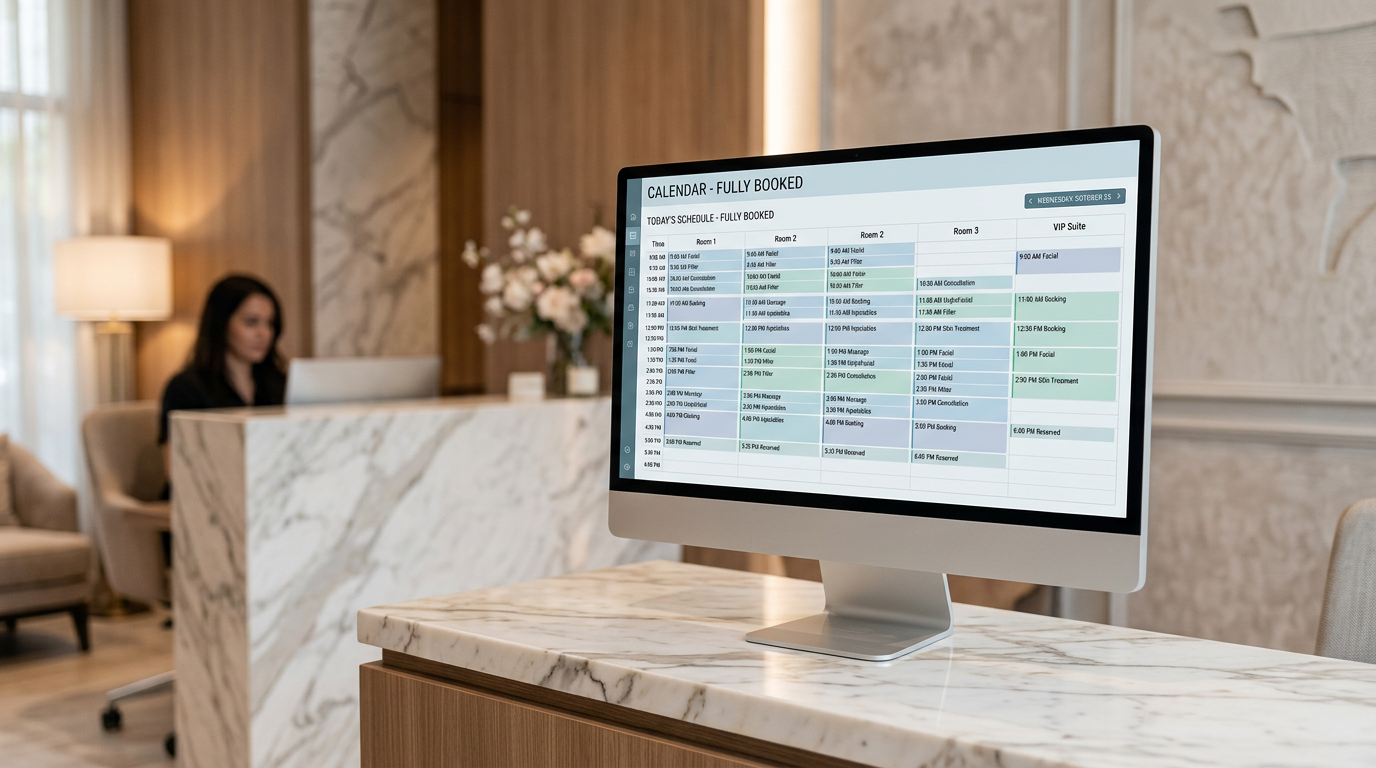
Our VAs actively manage your calendar to keep it full and optimized. This includes scheduling, rescheduling, confirming appointments, and following up on no-shows or leads. We help reduce gaps, increase bookings, and ensure a smooth patient journey from first contact to visit.
Administrative Support
We take care of time-consuming back-office tasks such as data entry, CRM updates, insurance coordination (if applicable), and general admin workflows. This allows your in-house team to stay focused on delivering exceptional care and services.
Positioning Angle
V-Assist isn’t just a virtual assistant service—we’re a growth partner for medspas and clinics looking to scale efficiently without compromising patient experience.
The V-Assist Experience
- HIPAA Compliance: All workflows and data handling meet medical privacy standards.
- Effortless Growth: Clinics can increase bookings and revenue without the overhead of hiring, training, or managing additional in-house staff.
- Professionalism: Provides a “high-touch” concierge experience that reflects a premium brand.
- Efficiency: Frees up in-house staff to focus on in-person patient care rather than administrative tasks.
Transform Your Clinic
Let V-Assist enhance your patient experience, streamline your operations, and ensure every lead and patient is treated with the care your brand deserves.
Book your exclusive demo today. Experience effortless growth.